Welcome to customize all kinds of clothing

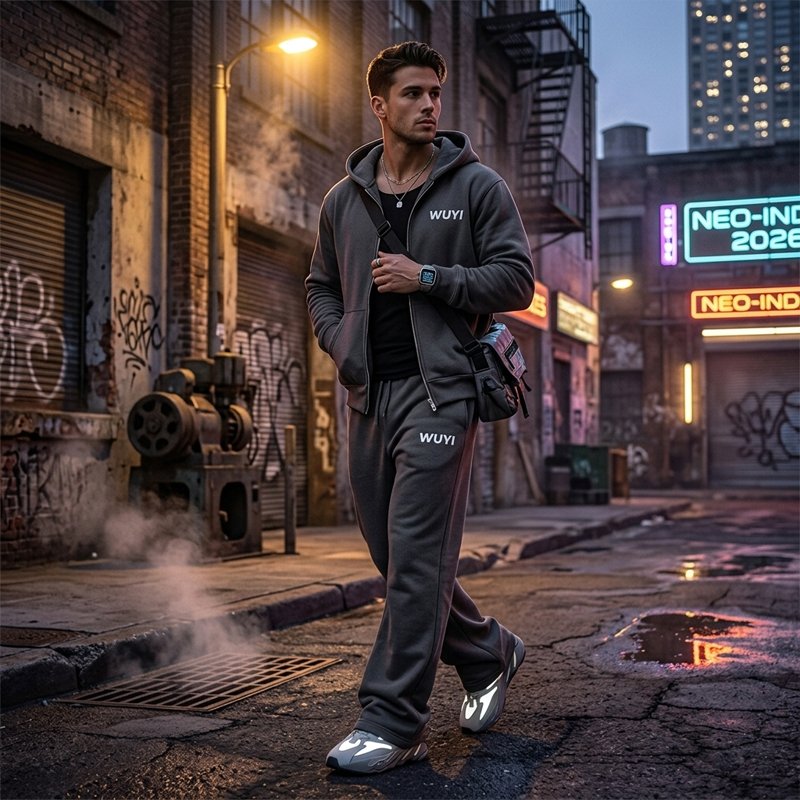
Luxury Hoodies: Smart Investment or Status Tax?

Introduction: The $25,000 Question
Walk into any streetwear boutique or browse any resale platform. You will see hoodies priced at $500, $1,000, even $25,000 for rare collaborations. The numbers seem absurd. It is a sweatshirt with a hood. How much can fabric and thread possibly cost?
The gap between production cost and retail price in luxury hoodies is vast. But dismissing the entire category as a “status tax” misses half the story.
Here is the short answer: for most people, luxury hoodies are a status tax—marketing-driven purchases that deliver diminishing returns on quality. But for collectors, fashion enthusiasts, and those who value specific design elements, they can be legitimate investments that hold or appreciate in value.
This guide breaks down where your money actually goes when you buy a luxury hoodie, when the premium is justified, and when you are simply paying for hype.
Let us get into it.
Part 1: The Market Reality — What Different Price Tiers Actually Deliver
Before we debate investment vs. status, let us establish what you get at each price point.
1.1 Price Tier Breakdown
Industry experts and apparel manufacturers have established clear tiers for hoodie pricing:
| Tier | Price Range | What You Get |
|---|---|---|
| Budget / Mass | $15–$30 | Basic cotton or polyester blends, simple construction, limited durability, mass-produced |
| Mid-Range | $30–$70 | Better fabric quality, improved stitching, decent durability, moderate brand recognition |
| Premium | $70–$150 | Heavyweight fleece or organic cotton, attention to detail, reliable fit, often ethically produced |
| Luxury / Designer | $150–$250+ | Exclusive fabrics, designer branding, limited editions, craftsmanship as marketing |
The “sweet spot” for quality and value is the premium tier ($70–$150). Above $250, you are increasingly paying for brand storytelling and exclusivity rather than tangible quality improvements.
1.2 The Diminishing Returns Curve
A $40 hoodie is significantly better than a $15 hoodie. A $100 hoodie is noticeably better than a $40 one—heavier fabric, better stitching, better fit.
But the jump from $100 to $500? The quality difference is marginal. The price difference is massive.
Manufacturers confirm that a 400+ GSM hoodie with brushed fleece lining and reinforced seams costs more to produce, but the production cost difference between a $100 hoodie and a $500 hoodie is far smaller than the retail price difference suggests.
The takeaway: Above $150–200, you are paying for brand, not materials.
Part 2: The Investment Argument — When Luxury Hoodies Make Financial Sense
Not all luxury hoodie purchases are irrational. Some actually hold or increase in value.
2.1 Limited Editions and Collaborations
The most famous example: the Supreme x Louis Vuitton Box Logo Hoodie from 2017 retailed for around $500. On the resale market, it has been offered for as much as $25,000.
This is not typical. But it illustrates the potential upside of limited collaborations between streetwear and luxury brands.
What drives this value:
- Extreme scarcity (limited production runs)
- Cultural relevance (the collaboration itself becomes a moment)
- Brand cachet (both Supreme and LV have devoted followings)
- Resale market dynamics (buyers willing to pay premiums for rare items)
However, these are exceptions. Most luxury hoodies do not appreciate. For every Supreme x LV that 10xes in value, there are hundreds of “limited edition” hoodies that sell at or below retail on resale platforms.
2.2 The “Cost-Per-Wear” Calculation
Even if a luxury hoodie does not appreciate, it can still be a better value than multiple cheap hoodies.
A $400 hoodie worn 200 times over three years costs $2 per wear. Five $80 hoodies worn 40 times each before falling apart cost the same per wear—$2—but the luxury piece may still be wearable after year three.
The math: A premium hoodie ($80–150) that lasts 4-5 years often has a lower cost-per-wear than a $30 hoodie replaced every 12-18 months.
The key variable is whether you will actually wear the luxury hoodie enough to amortize the cost.
2.3 Resale Value Retention
Some designer hoodies retain value better than others.
According to market analysis, designer hoodies with timeless design (clean lines, neutral colors, minimal branding) tend to hold their style currency over seasons. In contrast, trend-driven streetwear hoodies depreciate faster after initial buzz fades.
Value retention factors:
- Brand reputation (LV, Gucci, Balenciaga hold value better than hype-driven newcomers)
- Design timelessness (minimalist > loud graphics)
- Condition (unworn with tags sells for more)
- Rarity (limited drops > general release)
If you buy wisely, a luxury hoodie can be resold for 50-80% of retail after a few years. A budget hoodie has near-zero resale value.
Part 3: The Status Tax Argument — When You Are Just Paying for Hype
For most people buying luxury hoodies, the premium is not about quality. It is about signaling.
3.1 The Psychology of Drop Culture
Luxury and streetwear brands have perfected marketing strategies that make customers compete for the privilege of buying.
Key psychological drivers:
- Novelty: Unpredictable collaborations activate the dopamine system, driving up valuation
- Intermittent reinforcement: Unpredictable release schedules keep customers constantly engaged
- Scarcity: Limited availability triggers fear of missing out (FOMO)
- Status: Owning a rare hoodie signals membership in an exclusive community
These strategies are effective. The $25,000 Supreme x LV hoodie is not worth that much because of its fabric. It is worth that much because of what owning it says about you.
3.2 The “Brand Tax” on Materials
A luxury brand can charge $500 for a 400 GSM cotton hoodie. A mid-range brand charges $120 for the same fabric weight and similar construction.
Where does the extra $380 go? Marketing, retail markups, brand heritage storytelling, and profit margins—not better materials.
The uncomfortable truth: A $500 hoodie is not 10x better than a $50 hoodie. It is marginally better, if at all.
3.3 The Fast Fashion Paradox
Recent research challenges the assumption that luxury clothing is significantly more durable than fast fashion. High-end fashion is often no more durable than fast fashion items like jeans and t-shirts.
This means you may be paying a 500% premium for “quality” that is not actually better than options at 20% of the price.
The Forbes report (2024): High-end fashion durability is surprisingly on par with fast fashion, adding complexity to how “designer vs fast fashion” notions form in consumers’ minds.
Part 4: The Middle Ground — Premium Hoodies That Offer Real Value
Between $15 budget options and $500 luxury pieces lies the sweet spot: premium hoodies in the $70–150 range.
4.1 What You Get in the Premium Tier
According to apparel manufacturers, the premium tier delivers:
- Heavyweight fleece (350–450+ GSM) that holds shape and provides warmth
- Reinforced stitching (double-needle or flatlock seams)
- Durable ribbing (cuffs and hem retain elasticity)
- Preshrunk fabrics (minimal shrinkage after washing)
- Better fit (consistent sizing across colors and seasons)
These are not marketing claims. They are measurable quality indicators.
4.2 Brands That Deliver Value
Industry sources recommend these brands for quality without the hype markup:
| Brand | Price Range | Why It Is Recommended |
|---|---|---|
| UNIQLO | $40–60 | Great fabrics, functional designs, consistent quality |
| Everlane | $60–90 | Transparent pricing, quality basics |
| Kotn | $70–100 | Organic cotton, ethical production |
| Represent | $90–130 | Streetwear with premium construction |
| Pangaia | $90–120 | Sustainable tech fabrics |
These brands are not cheap. But they are reliable. You know what you are getting, and the price reflects materials and construction—not just hype.
4.3 The “One Good Hoodie” Strategy
Instead of owning five $40 hoodies that wear out in 18 months, buy one $120 hoodie that lasts 5 years.
The math works. The experience is better. And your closet is less cluttered.
The premium tier is where value peaks. Above $150, the curve flattens. You are paying for brand storytelling, not tangible quality.
Part 5: How to Tell If a Luxury Hoodie Is Actually Worth It
If you are considering a luxury hoodie, here is how to evaluate whether the premium is justified.
5.1 The Quality Checklist
Before buying, inspect these physical attributes:
| Quality Indicator | What to Look For |
|---|---|
| Fabric weight | 350+ GSM for heavyweight, 280-350 for midweight |
| Stitching | Double-needle or flatlock seams, no loose threads |
| Ribbing | Cuffs and hem snap back when stretched |
| Hood construction | Double-layered, holds shape |
| Zippers | YKK or branded, smooth operation |
| Fit consistency | Same size fits similarly across colors |
If a $400 hoodie has single-needle stitching, thin ribbing, and a flimsy hood, you are paying for the logo—not quality.
5.2 The Resale Test
Check resale platforms (Grailed, StockX, The RealReal) for the brand and model you are considering.
- If used hoodies sell for 70-90% of retail, the brand holds value
- If used hoodies sell for 30-50% of retail, the “luxury” is mostly hype
- If the hoodie is not on resale platforms at all, demand is low
This test reveals whether the market actually values the brand or just the marketing.
5.3 The “Will I Wear It?” Test
The best investment is a hoodie you will actually wear.
A $500 hoodie worn 500 times ($1 per wear) is a better value than a $50 hoodie worn 25 times ($2 per wear) before it falls apart.
But a $500 hoodie that sits in your closet is a terrible value, no matter how much it appreciates.
Be honest with yourself: Will you wear this hoodie? Or will you be too worried about ruining it?
Part 6: The Verdict — Smart Investment or Status Tax?
The answer depends entirely on how you buy and what you value.
6.1 Smart Investment When:
- You buy limited collaborations with proven resale value. Supreme x LV is the exception, not the rule, but similar opportunities exist.
- You buy premium-tier ($70–150) for daily wear. The cost-per-wear beats budget options over time.
- You buy timeless designs that hold style currency. Minimalist luxury (Loro Piana, Brunello Cucinelli) retains value better than trend-driven hype pieces.
- You actually wear the hoodie enough to amortize the cost. Daily wear changes the math entirely.
6.2 Status Tax When:
- You buy luxury hoodies primarily for the logo. You are paying for marketing, not materials.
- You buy limited drops without checking resale history. Most “limited” hoodies do not appreciate.
- You pay $500 for a hoodie that lacks basic quality indicators (thin fabric, poor stitching, flimsy hood).
- You buy the hoodie and never wear it. The ultimate status tax is unworn clothing.
6.3 The Honest Truth
A luxury hoodie is rarely a financial investment. Most will not appreciate. Most will lose value the moment you take off the tags.
But a luxury hoodie can be an investment in your daily comfort and style if you choose wisely and wear it often.
The real question is not “is this hoodie worth $500?” It is “is this hoodie worth $500 to me?”
For some people, yes. For most people, no.
And that is okay. Just know what you are paying for.
Part 7: FAQs — Your Quick Questions Answered
Q1: Are luxury hoodies actually better quality than mid-range ones?
Sometimes, but not always. Above $150-200, the quality difference becomes marginal. A $500 hoodie is not 5x better than a $100 hoodie. Check the quality indicators rather than trusting the price tag.
Q2: Do designer hoodies hold their resale value?
Some do. Limited collaborations and timeless minimalist designs hold value better than trend-driven pieces. Check resale platforms before buying to see actual market demand.
Q3: What is the best price range for a quality hoodie?
$70–150 is the “sweet spot” for quality and value. Above $150, you are increasingly paying for brand and exclusivity rather than tangible quality improvements.
Q4: Why are Supreme hoodies so expensive?
Supreme perfected “drop culture”—limited, unpredictable releases that create urgency and scarcity. The high resale prices reflect cultural value and community status, not material quality. A Supreme hoodie is not better constructed than a $100 hoodie from a premium brand.
Q5: Is a $500 hoodie ever worth it?
Yes, if:
- It is a limited collaboration with proven resale value
- You will wear it enough to justify the cost-per-wear
- The brand and design hold personal meaning for you
No, if you are buying it primarily for the logo or because you think it signals status.
Q6: Do fast fashion hoodies last as long as luxury ones?
Recent research suggests the durability gap is smaller than many assume. High-end fashion is often no more durable than fast fashion items. The main difference is fabric feel and fit consistency, not longevity.
Q7: What is the most important quality indicator in a hoodie?
Fabric weight (GSM) and stitching. A 400+ GSM hoodie with double-needle seams will outlast a 250 GSM hoodie with single-needle stitching, regardless of brand.
Q8: Can you get luxury-quality without the luxury price?
Yes. Premium brands like UNIQLO, Everlane, Kotn, and Represent offer high-quality hoodies in the $70–150 range. They skip the hype markup but deliver on materials and construction.
Q9: Should I buy one expensive hoodie or several cheap ones?
One premium hoodie ($80–150) will generally outlast three $30 hoodies and provide better fit, feel, and comfort. For daily wear, the premium option is usually the smarter investment.
Q10: How can I tell if a hoodie is worth the price?
Check: fabric weight (GSM listed?), stitching quality (double-needle?), ribbing (snaps back?), hood construction (double-layered?), and brand reputation. If a hoodie lacks these indicators, you are paying for hype, not quality.
Conclusion: Know What You Are Paying For
The luxury hoodie market is a study in contrasts.
On one hand, you have genuine investment pieces—limited collaborations that appreciate in value, premium hoodies that deliver decades of wear, and designs that hold cultural significance.
On the other hand, you have status tax—marketing-driven purchases where 90% of the price is brand storytelling and 10% is actual garment quality.
Three things to remember:
- The sweet spot for value is $70–150. Above that, you are increasingly paying for brand and exclusivity, not quality.
- Quality is measurable. Fabric weight, stitching, ribbing, and hood construction tell you more than the price tag.
- The best investment is a hoodie you will actually wear. Cost-per-wear matters more than retail price.
A luxury hoodie is not inherently a waste of money. But it is also not inherently a smart investment.
The smart move is not buying the most expensive hoodie. It is buying the right hoodie for your needs, at the right price, and wearing it until it falls apart.
That is not status. That is value.
More Articles from WUYI Apparel
Want to learn more about styling essentials hoodies or other apparel tips? Check out some of our other helpful articles:
- Wearing Black to a Wedding: A Modern Etiquette Guide
- Rainwear Jackets: The Perfect Fusion of Fashion and Function
- How To Measure Clothes
- Casual clothing – Casual and elegant through everyday life
- How to Find Your Style:An in-depth exploration of one’s own clothing style
For more tips and tricks on fashion and lifestyle, don’t forget to visit our Blog Section.
Head over to our Shop Page to browse our full collection and pick your favorite essentials hoodie