Welcome to customize all kinds of clothing

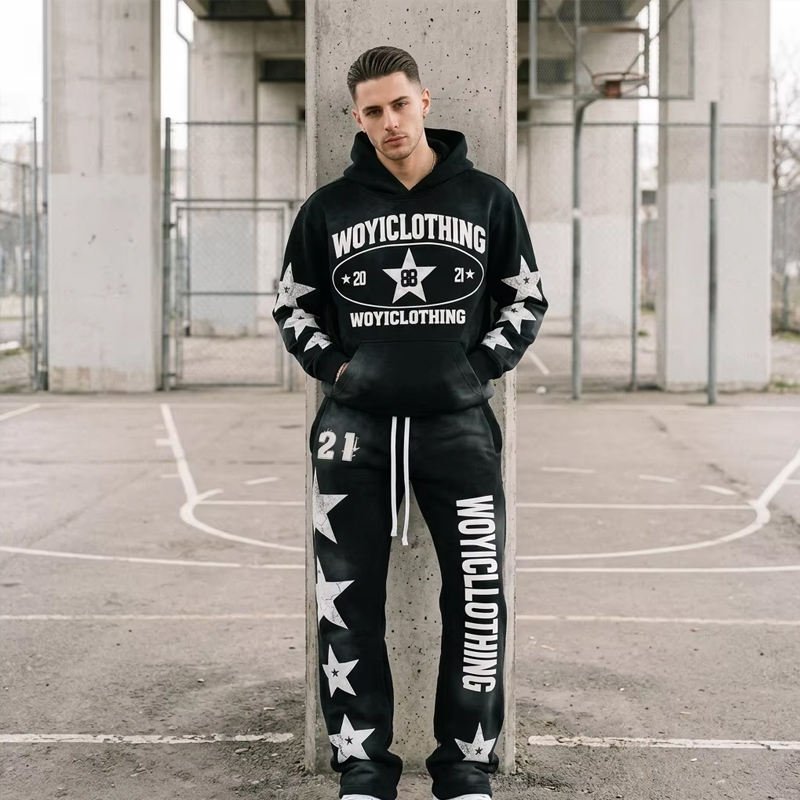
How Much Longer Can Collaboration Hoodie Premiums Last?

Introduction: The $25,000 Question
Walk into any streetwear boutique or browse any resale platform. You will see collaboration hoodies priced at $500, $1,000, even $25,000 for rare drops. The numbers seem absurd. It is a sweatshirt with a hood. How much longer can this last?
The collaboration hoodie market has been running on hype for nearly two decades. But every market has a saturation point.
Here is the short answer: collaboration hoodie premiums are not disappearing entirely, but the era of automatic massive markups is ending. The market is bifurcating—genuinely scarce, culturally significant collaborations will continue to command premiums, while the vast majority of “limited” drops are already selling at or below retail.
This guide analyzes the forces sustaining collaboration hoodie premiums, the signs of fatigue, and how much longer the model can hold.
Let us get into it.
Part 1: The Psychology That Creates the Premium
Before we predict the future, we must understand why people pay $25,000 for a hoodie in the first place.
1.1 Drop Culture’s Psychological Levers
The collaboration hoodie market is not driven by rational economic calculation. It is driven by psychological forces that brands have perfected.
Novelty. Our brains are wired to adapt to new patterns. Novelty activates the dopamine system, rewarding us with pleasurable feelings when we encounter something unexpected. The unusual pairing of a countercultural streetwear brand like Supreme and a high-end luxury brand like Louis Vuitton drives up consumer valuation and pricing appraisal.
Intermittent Reinforcement. Conventional wisdom suggests consistently rewarding customers builds loyalty. But research shows that unpredictable rewards can be even more powerful motivators. When brands keep customers guessing about when and where new drops will occur, engagement intensifies.
Anticipation. Dopamine is released not just when we experience pleasure, but in anticipation of it. Learning about product release information online can be as exciting as experiencing the product firsthand. The allure of the chase can be more seductive than the prize itself.
Scarcity. The fear of missing out (FOMO) drives much of social media behavior and also creates the urge to act quickly when drops occur. Brands make resources desirable not by creating access but by limiting availability, positioning products as rarefied symbols of success.
Status. Owning a hoodie that can cost upward of $25,000 signifies membership in an exclusive community. This status-seeking behavior is deeply rooted in our hierarchical social structure.
1.2 The Supremes of the World
Supreme, widely credited with perfecting drop culture, started as a local New York City skate shop and is now an iconic global leader. The brand built a fanatical community through social media, forums, and in-person events centered around hyping upcoming drops. In 2020, the 12-store company was sold for $2.1 billion.
A Supreme Louis Vuitton Box Logo Hoodie from the highly coveted 2017 collaboration has been offered for as much as $25,000 on the resale market.
That is the ceiling. The question is whether that ceiling is about to cave in.
Part 2: The Sustaining Forces — Why Premiums Still Exist
Despite growing fatigue, several forces continue to prop up collaboration hoodie premiums.
2.1 The Resale Market Math
The financial logic for collectors is simple: buy at retail, flip for profit.
The Supreme x The North Face Spring 2026 Summit Series Shell retailed at approximately $498 USD. On the secondary market in regions like Australia, markups often exceed 200 percent, placing the item well over $1,500 AUD.
A $600 profit per unit is hard to ignore.
The Supreme x The North Face Spring 2026 RTG drop triggered a massive surge in demand across Seoul and Sydney. Securing an RTG jacket at the $498 retail price versus the $1,100 Sydney resale price saved buyers exactly $602 per unit.
As long as this arbitrage exists, people will chase drops.
2.2 Scarcity as a Service
Limited editions have long been a go-to tactic for fashion and culture brands. The approach creates urgency and drives immediate sell-through. It also invites a second life on resale platforms, where fans pay premiums for items tied to favorite artists, shows, or teams.
Analysts say collaborations do three key things:
- They refresh a brand without a full redesign
- They bring new audiences by tapping into a partner’s fan base
- They turn shopping into an event, which helps content travel online
The KATSEYE x Gap collaboration illustrates this perfectly. The Sophia Laforteza hoodie—featuring an embroidered Philippine flag—became the fastest-selling item, with fans viewing it as a symbol of national pride, not just fashion.
2.3 The Global Supply-Demand Imbalance
International buyers face significant barriers to accessing US drops, which sustains high resale prices.
The A24 x Online Ceramics ‘Talk To Me’ 2026 Anniversary Capsule releases exclusively on US-based websites, leading to immediate sell-outs. In China, collectors are willing to pay triple the retail price.
For Australian enthusiasts, the primary challenge is the lack of direct retail access. Many US stores block international transactions, forcing buyers to use freight forwarders or pay inflated secondary market prices.
These access barriers artificially sustain premiums. If drops were globally accessible, prices would drop.
2.4 Streetwear Financialization
For some, collaboration hoodies are not clothing—they are assets.
The psychology is similar to cryptocurrency or sneaker investing. The community treats these items as stores of value, trading them on secondary markets with the expectation of appreciation. This financialization creates a self-fulfilling prophecy: as long as people believe the items will hold value, they do.
But financialized markets are volatile. And when confidence breaks, it breaks fast.
Part 3: The Warning Signs — Why the Model Is Strained
Several indicators suggest the collaboration hoodie premium model is under pressure.
3.1 Over-Saturation and Drop Fatigue
The market may be reaching a saturation point.
Brands have expanded collaboration strategies across categories—clothing, accessories, and collectibles—hoping to spark demand across style and fandom communities. The result is a constant stream of “limited” drops that no longer feel special.
The risk: Shoppers may tire of constant drops. When every week brings a new “limited” collaboration, nothing is truly limited.
One industry analysis warns that collaboration frequency is increasing while the time between “special” drops is shrinking. This compression erodes the novelty that drives dopamine release in the first place.
3.2 The Counterfeit Problem
Counterfeits can slip into the market, eroding trust and value.
When a $500 hoodie can be copied for $50, and the copies are increasingly difficult to distinguish from authentic items, the perceived value of the authentic piece diminishes. Buyers become wary. Resale prices compress.
The KATSEYE x Gap drop has already attracted unauthorized sellers promising pre-orders or sales, most of which are unreliable.
The counterfeit problem is not new, but it is getting worse. AI-generated authentication is improving, but so are counterfeit manufacturing techniques.
3.3 Consumer Fatigue and Backlash
Prices tied to hype can alienate longtime fans who miss out at retail.
When a collaboration hoodie drops and sells out in 30 seconds, the vast majority of interested buyers walk away empty-handed. Do that enough times, and enthusiasm turns to resentment.
Signs of fatigue:
- Declining engagement on drop announcements
- Items sitting on resale platforms longer
- Resale prices dropping closer to retail
- Community complaints about “cash grab” collaborations
3.4 The Volatility of Hype Cycles
The top tier of streetwear—limited releases, replicas of trending designs, niche designer-inspired pieces, and capsule-style drops—operates with extreme profit volatility.
High refund rates during trend cooling periods can destroy margins. Ad efficiency drops suddenly when an item becomes oversaturated. Customer service friction increases when expectations are inflated.
While gross margins on paper can hit 50–80%, net profitability frequently suffers unless sellers manage offer timing, demand pacing, and quality control with precision.
This volatility means the market is fragile. A few high-profile misses could trigger a broader pullback.
3.5 The Operational Reality
For brands, collaborations are operationally challenging.
Synchronizing limited-run production cycles with global distribution networks is difficult, particularly as raw material costs and logistics disruptions continue to impact lead times.
For individual resellers, the risks are also mounting. Australian collectors face having their capital tied up in cancelled transactions while the resale market price climbs higher. A failed drop can mean significant financial loss.
Part 4: The Tiers — Not All Collaboration Hoodies Are Equal
The collaboration hoodie market is not monolithic. It is splitting into distinct tiers with different futures.
4.1 Tier 1: Ultra-Limited Holy Grails
These are the $25,000 Supreme LV hoodies. The 2017 Kaws x Uniqlo (original run). The rare sample pieces.
Future outlook: Strong. These items have achieved cultural artifact status. Their premiums are likely sustainable because they are backed by genuine scarcity and historical significance.
Examples: Supreme x Louis Vuitton (2017), early Kaws collaborations, original BAPE x Kanye West pieces.
Premium sustainability: High. These are collectibles, not clothing.
4.2 Tier 2: Seasonal Hype Drops
These are the regular Supreme x TNF releases, the quarterly Yeezy Gap drops, the seasonal online ceramics capsules.
Future outlook: Strained. These drops happen multiple times per year. The novelty is wearing thin. Resale premiums have compressed.
The Supreme x The North Face Spring 2026 Summit Series Shell is technically premium, but the $498 retail price already captures most of the value. Resale premiums exist but are not the 5-10x multiples of the golden era.
Premium sustainability: Moderate to low. These will likely continue, but margins will compress.
4.3 Tier 3: Mass-Market Collaborations
These are collaborations between mass-market brands and celebrities or properties—think KATSEYE x Gap, or Harry Styles x anything.
Future outlook: Volatile. Some drops sell out instantly. Others sit. The premiums are driven by fandom, not scarcity.
The KATSEYE x Gap hoodies are priced at $100—accessible, not luxury. The premium is not in the retail price but in the emotional value to fans.
Premium sustainability: Fandom-dependent. These are not investment pieces; they are merchandise.
4.4 Summary Table: Collaboration Tiers
| Tier | Examples | Price Range | Premium Driver | Sustainability |
|---|---|---|---|---|
| Ultra-limited holy grails | Supreme x LV (2017) | $1,000-$25,000+ | Cultural artifact status | High |
| Seasonal hype drops | Supreme x TNF, Yeezy Gap | $200-$1,000 | Drop culture + scarcity | Strained |
| Mass-market collabs | KATSEYE x Gap | $50-$150 | Fandom + identity | Volatile |
Part 5: The Brands — Who Is Winning and Who Is Struggling
5.1 Gap: The Comeback Kid
Gap is aggressively using collaboration strategies to drive brand heat. The partnership with Awake NY represents a sophisticated effort to bridge mass-market retail with high-concept streetwear.
Market data indicates these curated drops often result in a 20–30% increase in digital traffic during launch weeks, helping legacy retailers remain competitive.
The KATSEYE collaboration generated over 500 million views across social platforms and contributed to 7% comparable sales growth. The strategy is working—for now.
Gap’s risk: Over-reliance on collaborations to drive growth. If the next few drops flop, the momentum reverses.
5.2 Supreme: The Gold Standard Under Pressure
Supreme perfected drop culture, but the brand faces the same saturation pressures as everyone else.
The 2026 revival of the Remote Terrain Gear (RTG) line triggered a massive surge in demand across Seoul and Sydney, proving Supreme can still move product. But the overall frequency of Supreme drops has increased, and not every release sells out instantly.
Supreme’s advantage: The brand has a 30-year history and a devoted community that other collaborations lack.
5.3 The Middle Tier: A24 x Online Ceramics
These collaborations thrive on cult followings, not mass appeal. The ‘Talk To Me’ 2026 Anniversary Capsule is trending because of the unique maximalist aesthetic of Online Ceramics, combined with the limited production run that A24 is known for.
Sustainability: These niche collaborations may outlast mass-market hype because they are not trying to be everything to everyone.
Part 6: The Resale Market — Where the Premiums Are Made and Lost
The secondary market is where collaboration hoodie premiums are realized—or destroyed.
6.1 The Geography of Arbitrage
The price gap between US retail and international resale sustains the entire ecosystem.
- A Supreme x TNF Shell retails for $498 USD; Australian resale prices exceed $1,500 AUD.
- A KATSEYE x Gap hoodie retails for $100 USD; final cost to Filipino buyers reaches ₱6,500–7,500 ($115–130 USD) after shipping and taxes.
- A Online Ceramics hoodie retails for $90–110 USD; prices in China jump to 1,800–2,500 CNY ($250–345 USD).
These spreads are large enough to justify the effort of securing drops. But spreads are compressing. As more buyers enter the market, competition increases, and margins shrink.
6.2 The Operational Friction
For international buyers, the process is fraught with risk.
Australian collectors face having their capital tied up in cancelled transactions while resale prices climb higher. A single cancelled order can wipe out the profit from several successful ones.
Japanese auction sites list Supreme x TNF items with condition notes like “external stains” and “zipper hardware wear”—proving that even “investments” are subject to physical degradation.
6.3 The Authenticity Crisis
As hype increases, so do counterfeits. The KATSEYE craze has already attracted unauthorized sellers.
For buyers, the risk of purchasing a fake is real and growing. For sellers, the presence of fakes compresses prices for authentic items as buyers become more cautious.
The dynamic: Counterfeits erode trust. Trust erodes premiums. Premiums erode the entire collaboration model.
Part 7: The Future — What Happens Next
Based on the trends above, here is what to expect in the coming years.
7.1 Continued Bifurcation
The market will split into two distinct segments:
- True collector’s items (ultra-limited, culturally significant) will retain or grow in value. These are the $25,000 Supreme LV hoodies.
- Mass “limited edition” drops will see premiums compress. Many will sell at or below retail on resale platforms.
7.2 Shorter Attention Spans
TikTok cycles have accelerated trend lifespans. A collaboration that is hot this month may be forgotten next month. This compression makes long-term “investment” holding riskier.
Dropshipping analysis confirms that top-tier streetwear operates with “high refund rates during trend cooling periods.” When the hype fades, the demand evaporates.
7.3 The Return of Quality Over Hype
As consumers tire of endless “limited” drops, they may shift focus to quality and longevity over scarcity.
The psychology of drop culture relies on novelty and anticipation. But novelty requires genuine newness. When every drop feels like a rehash of the last, the dopamine hit diminishes.
Brands that rely solely on scarcity—without design merit—will struggle.
7.4 Geographic Expansion and Compression
As international buyers become more sophisticated at accessing US drops, the arbitrage window may close.
Freight forwarding, package consolidation, and tax-free US addresses are becoming standard tools. When every buyer can access retail prices, resale premiums compress.
7.5 The Role of Sustainability
Limited runs can cut waste if forecasting is accurate. But if hype overreaches and inventory lingers, the effect reverses.
Sustainability concerns may also influence younger buyers. The environmental cost of producing “limited” items that end up in landfills may eventually outweigh the status benefit of owning them.
7.6 Timeline Estimate
| Timeframe | Expected Changes |
|---|---|
| 0-2 years | Continued bifurcation; mass drops see premium compression |
| 2-5 years | Several high-profile collaboration failures; shakeout in resale market |
| 5+ years | Stabilization at lower premium levels; true collector items retain value |
Part 8: Practical Implications — What This Means for Different Stakeholders
8.1 For Collectors and Investors
- Focus on true rarity. Items with edition numbers, historical significance, and cultural weight will hold value.
- Avoid chasing every drop. Most “limited” drops are not limited enough.
- Consider the holding period. Short-term flipping is riskier than it was five years ago.
- Factor in condition. A $25,000 hoodie with “external stains” is not a $25,000 hoodie.
8.2 For Casual Buyers
- Do not pay massive resale premiums. The item you want today may be available at retail next month.
- Wait out the hype. Prices often drop 30-50% a few months after the initial drop frenzy.
- Buy because you like it, not because you think it will appreciate.
8.3 For Brands
- Scarcity without substance is not sustainable. The design must justify the hype.
- Frequency matters. Too many drops erode the novelty that drives dopamine release.
- Build community, not just customers. The brands that survive will be those with genuine cultural roots, not just marketing budgets.
- Manage expectations. When a drop sells out in 30 seconds, most interested buyers walk away empty-handed—and resentful.
8.4 For Resellers
- Margins are compressing. The easy money has been made.
- Operational risk is rising. Cancelled orders, counterfeit claims, and chargebacks eat into profits.
- Geographic arbitrage is narrowing. As international buyers become more sophisticated, the price gap closes.
- Specialize or diversify. Generalist reselling is becoming less profitable.
Part 9: FAQs — Your Quick Questions Answered
Q1: Are collaboration hoodies still a good investment?
For ultra-limited, culturally significant items—yes. For seasonal hype drops—increasingly, no. The market is bifurcating.
Q2: Why do people still pay $1,000 for a hoodie?
Psychological drivers: novelty, intermittent reinforcement, anticipation, scarcity, and status. Also, the potential for resale profit.
Q3: How long can drop culture last?
Drop culture is not disappearing, but its dominance is waning. The model relies on novelty, and novelty diminishes with frequency.
Q4: What is the most important factor in a collaboration hoodie’s value?
Scarcity. But scarcity must be genuine. Edition numbers, limited production runs, and single-channel distribution matter.
Q5: Will the $25,000 Supreme LV hoodie ever drop in value?
Unlikely. It has achieved cultural artifact status. But such items are the exception, not the rule.
Q6: Are brands over-saturating the collaboration market?
Yes. Analysts warn that shoppers may tire of constant drops. The time between “special” releases is shrinking.
Q7: How can I tell if a collaboration hoodie will hold value?
Check: production quantity (edition size), brand reputation, design significance, and secondary market trends. If resale prices are already below retail, the premium is gone.
Q8: Is the international resale market sustainable?
The arbitrage relies on access barriers. As barriers lower (better logistics, freight forwarding), premiums compress. Not sustainable at current levels.
Q9: What kills collaboration hoodie value?
- Over-saturation (too many similar drops)
- Counterfeits (eroding trust)
- Quality issues (poor materials or construction)
- Trend fatigue (the aesthetic goes out of style)
Q10: Should I buy collaboration hoodies in 2026?
For personal enjoyment—yes, if you like them. For investment—be selective. Most will not appreciate.
Conclusion: The Party Is Not Over, but the Hangover Is Coming
Collaboration hoodie premiums are not going to zero. But the era of automatic massive markups is ending.
The market is bifurcating. Ultra-limited, culturally significant collaborations will continue to command premiums. They have become collectibles, not clothing. The $25,000 Supreme LV hoodie is not going to $25 anytime soon.
But the vast majority of seasonal hype drops are already showing signs of strain. Resale premiums are compressing. Drops are more frequent. Counterfeits are more sophisticated. Consumer fatigue is real.
The psychological levers that drive drop culture—novelty, anticipation, scarcity, status—still work. But they work best when used sparingly. Overuse them, and they break.
Three things to remember:
- The market is bifurcating—holy grails will hold value; mass drops will see premium compression.
- Frequency is the enemy of novelty—too many drops erode the scarcity that drives demand.
- The era of easy flipping is ending—margins are compressing, and operational risks are rising.
The collaboration hoodie is not dead. But the days of buying anything with a “limited” tag and automatically doubling your money are ending.
The party is not over. But the hangover is coming. And only the strongest collaborations will survive it.
More Articles from WUYI Apparel
Want to learn more about styling essentials hoodies or other apparel tips? Check out some of our other helpful articles:
- Wearing Black to a Wedding: A Modern Etiquette Guide
- Rainwear Jackets: The Perfect Fusion of Fashion and Function
- How To Measure Clothes
- Casual clothing – Casual and elegant through everyday life
- How to Find Your Style:An in-depth exploration of one’s own clothing style
For more tips and tricks on fashion and lifestyle, don’t forget to visit our Blog Section.
Head over to our Shop Page to browse our full collection and pick your favorite essentials hoodie