Welcome to customize all kinds of clothing

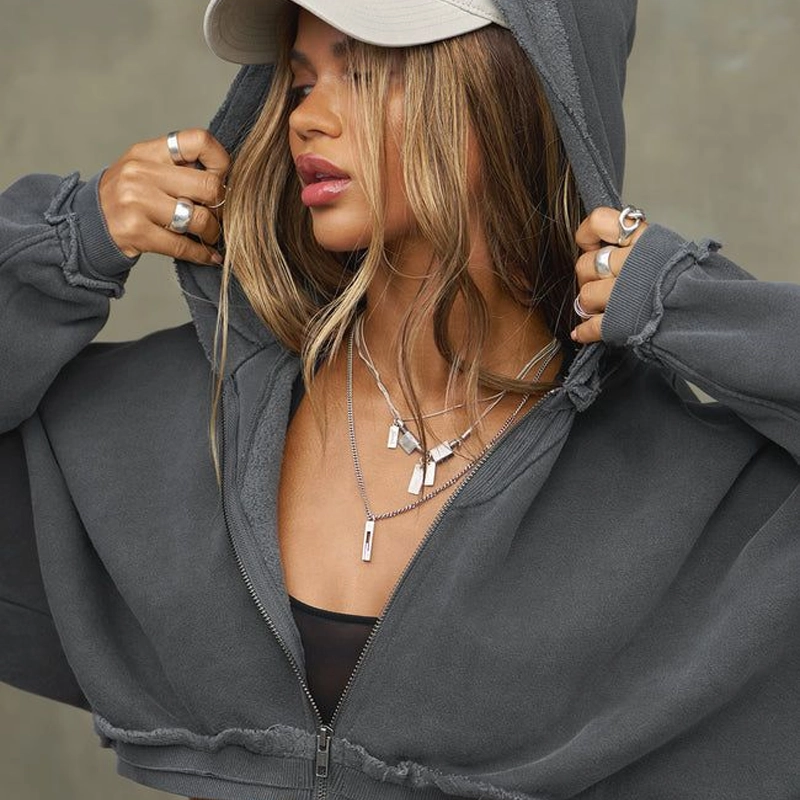
Garment-Dyed vs Regular Dye: The Texture Difference

Introduction: Why Your Hoodie Feels Different
Walk into any clothing store. Pick up two hoodies that look almost identical. Same brand. Same price. Same color name.
Now hold them. One feels soft and broken-in, like it has been yours for years. The other feels stiff, almost cardboard-like, with a flat, uniform color.
That difference in your hands? That is the difference between garment-dyeing and regular dyeing.
The way a hoodie is dyed affects not just its appearance. It also changes how the fabric feels against your skin, how it ages, and how it drapes on your body. This is not a minor detail. It separates a hoodie that feels like armor from one that feels like a second skin.
Here is the short answer: Garment-dyed hoodies are softer immediately and develop character over time. Regular-dyed hoodies are more uniform and colorfast but start out stiffer.
Naturally, this guide breaks down exactly what each dyeing method does to the texture of your hoodie. No chemistry degree required.
Part 1: What — The Three Dyeing Processes Explained
Before we talk texture, let us understand what actually happens to the fabric.
1.1 Regular Dye: Raw Fabric Bulk Roll Dyeing
The most common method for everyday hoodies is piece dyeing.
Here is how it works. First, the manufacturer knits the fabric. The fabric comes off the machine as undyed, off-white material. Then, the entire roll of fabric goes into a dye bath. Every fiber absorbs the color equally.
Only after the fabric receives its color does anyone cut and sew it into a hoodie.
Texture impact: The dye spreads evenly across the raw fabric. As a result, the finished hoodie has a uniform, solid block of color. The fabric has not experienced agitation or softening from the dyeing process. Consequently, the result feels crisp, clean, and sometimes stiff out of the box.
Think of it like this: Raw fabric bulk roll dyeing resembles frosting a cake. You bake the cake first, then you cover it in whatever color frosting you want at the end.
1.2 Garment Dyeing: Finished Garment Overall Dye Process
By contrast, garment dyeing flips the entire process around.
First, the manufacturer sews the hoodie from undyed “prepared-for-dye” (PFD) fabric. Then, the finished garment goes into a dye bath. Every part of the hoodie — the body, hood, cuffs, seams, even the thread — absorbs color together.
Because the garment already has its full construction, the dye settles differently on different textures. The ribbed cuffs and collar absorb more color. The seams may look slightly lighter or darker. As a result, the finished garment has subtle tonal variation — not a flat, uniform block of color.
Texture impact: The finished garment overall dye process involves high-heat washing and softeners. These effectively “break in” the fabric during production. Consequently, the hoodie feels buttery, worn-in, and incredibly soft from day one.
Think of it like this: Finished garment overall dye process resembles making chocolate chip cookies. The chips (variations) are mixed in from the start. You cannot achieve that texture by adding frosting later.
1.3 A Third Option: Outer Layer Color Coating Method
There is also pigment dyeing, which often confuses people with garment dyeing. Pigment dye uses insoluble color particles that cling to the fabric’s surface rather than bonding deep into the fibers.
Texture impact: Outer layer color coating method hoodies have a matte, almost chalky finish. They feel soft immediately and have that cool, sun-faded, vintage look. However, they are designed to fade intentionally over time. The color becomes part of the garment’s character rather than staying pristine.
In practice, many “garment-dyed” hoodies use pigment dyes. As a result, the terms sometimes overlap in marketing. The key takeaway: if a hoodie feels incredibly soft and looks slightly faded or uneven in color, it is likely pigment or garment-dyed.
1.4 Quick Comparison Table
| Feature | Piece Dye (Regular) | Garment Dye |
|---|---|---|
| Process order | Dye fabric, then sew | Sew garment, then dye |
| Color uniformity | Very high — consistent throughout | Subtle shade change on stitching |
| Initial texture | Crisp, can be stiff | Soft, broken-in |
| Aging | Fades evenly or stays colorfast | Develops character, vintage look |
| Dye chemistry | Dye bonds inside fibers | Outer layer color coating method or internal bonding |
| Best for | Core lines, uniforms, performance wear | Casual, lifestyle, vintage aesthetic |
Part 2: Why — How Dyeing Method Changes What You Feel
Now let us explore the specific ways these processes affect texture.
2.1 Initial Softness: Garment Dye Wins Immediately
This difference becomes obvious the moment you pick up a hoodie in a store.
Garment-dyed hoodies feel soft right away. The dyeing process includes high-heat washing and fabric softeners, which effectively pre-wear the garment. The fabric has already undergone agitation, stretching, and relaxation before it ever reaches you.
One textile expert puts it bluntly: “If you care about how a hooded sweatshirt feels on your skin, pigment-dyed cotton wins, hands down.” The same principle applies to garment-dyeing in general.
Regular (piece-dyed) hoodies often feel stiffer out of the box. The fabric has not experienced the same aggressive softening process. The dye spreads evenly across raw fabric, but the fabric itself has not undergone stress or break-in. This explains why many mass-market hoodies feel almost cardboard-like when new.
The takeaway: Choose garment-dyed if you want a hoodie that feels cozy immediately. Choose piece-dyed if you do not mind breaking in a hoodie over time.
2.2 Surface Feel: Uniform vs. Textured
Beyond initial softness, run your hand across a garment-dyed hoodie. Then do the same with a regular hoodie.
Regular piece-dyed fabric feels smooth and uniform. The surface has no variation because every fiber absorbed the same amount of dye evenly. The texture comes entirely from the fabric weave, not from the dyeing process.
Garment-dyed fabric has subtle texture variation. Because the dye settles differently on different areas — seams, ribbing, flat panels — the surface feels more “alive.” Color depth translates to perceived texture. Your eye sees variation, and your brain interprets it as richer, more interesting fabric.
This explains why people often describe garment-dyed hoodies as having a “vintage” or “authentic” feel. They do not look or feel brand new. They appear loved.
2.3 Aging: Graceful Fading vs. Uniform Wear
Here, personal preference matters most.
Garment-dyed hoodies are designed to age. The fading is intentional. As you wash and wear them, the color continues to evolve, creating a patina similar to well-worn denim. The fabric becomes even softer over time. Fading occurs organically, not like damage.
Levi’s, which pioneered garment-dyeing for its vintage lines, notes that “garment dye washes down over time just like denim. It gives pieces an authentic, heritage look.”
Regular piece-dyed hoodies are more colorfast initially. They hold their color longer. But when they do fade, the process can look uneven or patchy, especially after exposure to sunlight or heavy laundering. The fabric may also become rough or pilled before the color fades noticeably.
The fade on a piece-dyed hoodie does not look intentional. It looks like wear and tear.
The takeaway: Choose garment-dyed if you love the idea of a hoodie that improves with age. Choose piece-dyed if you want your hoodie to look the same for as long as possible.
2.4 Shrinkage and Shape Retention
Garment-dyed hoodies have a hidden advantage: they have already undergone stress testing.
Because garment-dyeing involves high-heat washing, the fabric has already experienced the shrinkage process before you buy it. The hoodie comes pre-shrunk. What you buy is what you get.
Regular piece-dyed hoodies have not gone through the same aggressive washing. They may shrink noticeably (5-10%) after the first hot wash and dry. The seams can twist. The cuffs may distort.
This difference matters. A piece-dyed hoodie that fits perfectly in the store may become too small after one laundry cycle. A garment-dyed hoodie will stay the same size.
The takeaway: Garment-dyed hoodies offer more predictable sizing. Piece-dyed hoodies require careful washing to maintain fit.
2.5 The Seams and Trims Clue
Here is an easy way to identify the method, just by looking.
On piece-dyed hoodies, the thread color matches the fabric only if the manufacturer used pre-dyed thread. Often, the thread remains undyed and may appear lighter than the surrounding fabric.
On garment-dyed hoodies, the thread absorbs dye at the same time as the fabric. Everything — seams, cuffs, even interior tags — emerges in the same color family, though perhaps at slightly different intensities.
Examine the seams. If the stitching looks noticeably lighter or darker than the fabric, the hoodie likely came from piece-dyeing. If everything blends together harmoniously, it likely came from garment-dyeing.
Part 3: Based on Practical Demands — Choosing the Right Type
Here is how to decide which dyeing method suits your needs.
3.1 When to Choose Garment-Dyed
You want immediate softness. Garment-dyed hoodies feel broken-in from day one. No break-in period exists.
You appreciate subtle variation in color. You like that each hoodie differs slightly, that the cuffs look a touch darker, that the seams add visual interest.
You want a hoodie that ages gracefully. You look forward to the faded, vintage look that develops over time. You view wear as character, not damage.
You feel tired of hoodies that shrink unpredictably. Garment-dyed hoodies have already completed the shrinking process.
Best for: Casual wear, lifestyle brands, people who want one hoodie for years, anyone who hates stiff new clothes.
3.2 When to Choose Regular (Piece-Dyed)
You want consistent, uniform color. You prefer that your hoodie looks exactly like the one next to it on the rack. Variation bothers you.
You need color precision for branding or uniforms. If you are purchasing multiple hoodies for a team or business, piece-dyeing ensures every hoodie looks identical.
You prefer to break in your own clothes. You enjoy the process of softening a hoodie over time through wear and washing.
You need to stay on a tighter budget. Garment-dyeing generally costs more due to the additional processing steps.
Best for: Workwear, performance hoodies, bulk orders, people who dislike faded or vintage looks.
3.3 The “Cookie” Test
Remember this analogy from the textile industry:
- Piece-dyed = Frosting. You bake the cake (fabric) first, then add color (dye) at the end. The result looks uniform, smooth, and predictable.
- Garment-dyed = Chocolate Chip Cookies. The chips (color variation) become mixed into the dough before baking. You cannot achieve that texture by adding frosting later.
Choose garment-dyed if you want a hoodie that resembles a chocolate chip cookie — unique, textured, full of character.
Choose piece-dyed if you want a hoodie that looks like a perfectly frosted cake — smooth, uniform, pristine.
3.4 What the Labels Tell You
Product descriptions will often signal the dyeing method without explicitly stating it.
Look for these phrases:
- “Garment dyed for a vintage feel” — This indicates garment-dye
- “Washed-out look” — Likely garment or pigment dyed
- “Authentic, worn-in feel” — Garment-dyed
- “Pre-shrunk” — Could indicate either, but often signals garment-dyeing due to the heat process
- “Pigment-dyed” — A specific type of garment-dyeing
Phrases that suggest piece-dyeing:
- No mention of dyeing method at all
- “Colorfast” — Piece-dyed
- “Uniform color” — Piece-dyed
- The hoodie sells primarily as a blank for printing
Part 4: In Terms of Lifestyle Match — Which Type Fits Your Life
4.1 Garment-Dyed Is For:
The minimalist who buys fewer, better items. You want one hoodie that lasts for years and improves with age.
The texture-seeker. You notice when fabric feels special. You run your hand over garment-dyed cotton and think, “Yes, this is it.”
The person tired of stiff new clothes. You do not want to spend weeks breaking in a hoodie. You want comfort now.
The vintage enthusiast. You love denim that fades, leather that develops patina, and hoodies that appear to carry stories.
Best for: Lifestyle casual wear, weekend wear, travel, creative workplaces
4.2 Piece-Dyed Is For:
The uniform-wearer. You need every hoodie to look exactly the same for a team, event, or business.
The performance-focused athlete. Piece-dyed hoodies often use technical fabrics that prioritize moisture-wicking and durability over vintage aesthetics.
The person who dislikes fading. You want your hoodie to look the same on year three as it did on day one.
The budget-conscious shopper. Piece-dyeing offers more cost-effectiveness, especially for large production runs.
Best for: Sportswear, workwear, team apparel, performance wear
Part 5: FAQs — Your Quick Questions Answered
Q1: Is garment-dyed better quality than regular-dyed?
Not necessarily. Garment-dyed feels softer immediately and ages gracefully. Piece-dyed has more uniform color. “Better” depends entirely on what you want.
Q2: Why are garment-dyed hoodies more expensive?
The process demands more labor — sew first, then dye, then wash, then soften. Piece-dyeing dyes entire fabric rolls in one batch, making it much more efficient.
Q3: Will a garment-dyed hoodie shrink?
Less than a piece-dyed hoodie. The high-heat washing during garment-dyeing has already caused most shrinkage.
Q4: Does garment-dyeing work on all fabrics?
No. It works best on natural fibers like cotton, linen, and rayon. It does not work well on synthetics like polyester.
Q5: Can I identify the method without a label?
Yes. Examine the seams. Different color stitching likely indicates piece-dyeing. Tonal variation that matches likely indicates garment-dyeing.
Q6: Do both methods fade over time?
Yes, but differently. Garment-dyed hoodies fade intentionally and gracefully. Piece-dyed hoodies may fade unevenly when they finally show wear.
Q7: Which feels softer?
Garment-dyed, hands down. The process includes high-heat washing and softeners that break in the fabric before it ever reaches you.
Q8: Can I machine wash a garment-dyed hoodie?
Yes. Wash cold, inside out, with similar colors. Skip fabric softener. Air dry or use low heat.
Q9: Is pigment dye the same as garment dye?
Related but not identical. Pigment dye is an outer layer color coating method that often appears in garment-dyeing. Many “garment-dyed” hoodies actually use pigment dyes.
Q10: Which one should I buy?
Choose garment-dyed for immediate softness, character, and graceful aging. Choose piece-dyed for uniform color, predictable fading, and lower cost.
Conclusion: Choose the Hoodie That Matches How You Live
Ultimately, the difference between garment-dyed and regular-dyed hoodies is not about right or wrong. It is about matching the garment to your life.
If you appreciate things that age well — worn leather, faded denim, a hoodie that tells a story — garment-dyed is for you. You will love the softness, the depth, the way it becomes more yours over time.
If you prefer things that stay the same — consistent, reliable, predictable — piece-dyed is your choice. You will appreciate the uniform color, the long-lasting solid color stability, the ability to buy multiples that look identical.
Neither option is better. They are just different.
And now you know how to tell them apart.
More Articles from WUYI Apparel
Want to learn more about styling essentials hoodies or other apparel tips? Check out some of our other helpful articles:
- Wearing Black to a Wedding: A Modern Etiquette Guide
- Rainwear Jackets: The Perfect Fusion of Fashion and Function
- How To Measure Clothes
- Casual clothing – Casual and elegant through everyday life
- How to Find Your Style:An in-depth exploration of one’s own clothing style
For more tips and tricks on fashion and lifestyle, don’t forget to visit our Blog Section.
Head over to our Shop Page to browse our full collection and pick your favorite essentials hoodie