Welcome to customize all kinds of clothing

What is a hoodie

What is a Hoodie? More Than Just a Garment
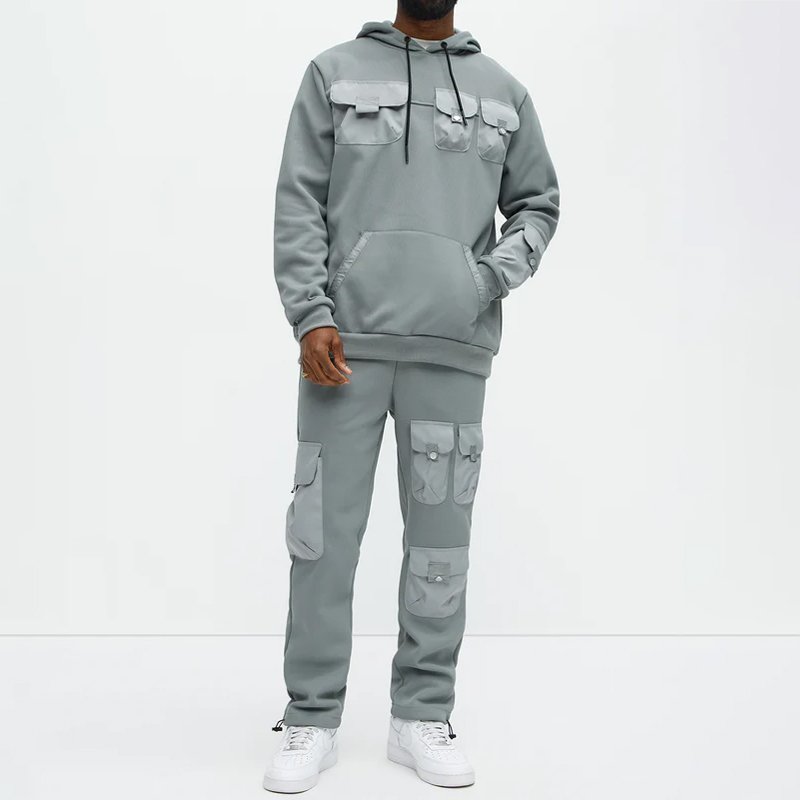
At its most basic, a hoodie is a casual sweatshirt or jacket featuring a hood. Typically crafted from soft, sturdy cotton or a cotton-polyester blend, it often includes a large front pocket (known as a “kangaroo pocket”) and a drawstring to adjust the hood’s opening. But to define a hoodie by these physical attributes alone is to tell only a fraction of its story. The hoodie is a cultural chameleon, a garment imbued with complex meanings of comfort, rebellion, anonymity, and identity. It is a simple piece of clothing that speaks volumes.
The hoodie’s origins are practical. In the 1930s, the Knickerbocker Knitting Company (which would later become Champion) is widely credited with producing the first hooded sweatshirts. Their primary customers were laborers working in freezing warehouses in upstate New York, who needed warmth and protection from the elements. Around the same time, the hood was added to sports uniforms for athletes training in cold weather. For decades, it remained a functional, unassuming piece of athletic and workwear.
Its transformation into a cultural icon began in the 1970s. Hip-hop culture, emerging from the Bronx in New York City, adopted the hoodie for its comfort, affordability, and its subtle air of defiance. It was a rejection of the formal, constricting clothing associated with the establishment. This association was cemented in popular culture by iconic figures and moments. In 1976, the film “Rocky” depicted the underdog boxer training in a grey hoodie, symbolizing grit, determination, and blue-collar heroism.
However, the very feature that defines the hoodie—the hood—also became a source of controversy. The hood provides anonymity and a sense of privacy, a quality that can be perceived as either protective or threatening depending on the context. This duality has placed the hoodie at the center of numerous social and political storms, making it one of the most potent and debated garments of the last century.
Real-World Cases: The Hoodie in the Headlines
The hoodie’s complex symbolism is best understood through its presence in real-world events, where it has been a focal point of tragedy, protest, and high-stakes business.
1. The Trayvon Martin Case (2012)
Perhaps the most profound and tragic case associated with the hoodie is the shooting of Trayvon Martin, a 17-year-old African American teenager. On February 26, 2012, Martin was walking back from a convenience store in Sanford, Florida, wearing a grey hoodie. He was fatally shot by neighborhood watch coordinator George Zimmerman, who found his presence “suspicious.”
The hoodie instantly became a powerful symbol of racial profiling and social injustice. In the ensuing national outcry, it was transformed from an item of clothing into a protest uniform. The “Million Hoodie Marches” saw thousands of people, including politicians and celebrities, don hoodies in solidarity. The hashtag #hoodie spread across social media. In this context, the hoodie represented a young life lost, the criminalization of Black youth, and a demand for justice. It highlighted how a simple garment could be weaponized by prejudice, and how, in response, it could become a shield for a movement.
2. Mark Zuckerberg and the “Hoodie CEO”
In a completely different arena, Facebook founder Mark Zuckerberg adopted the hoodie as his signature look. For years, his public appearances, including high-profile business meetings and the company’s IPO, featured a simple, grey hoodie. This was a deliberate sartorial choice that communicated a specific message.
In the world of Silicon Valley, where Zuckerberg was challenging corporate giants, his hoodie was a symbol of disruption. It signified that he was not a traditional “suit-and-tie” executive; he was a hacker, an innovator, and a representative of a new, more casual, and meritocratic tech culture. Critics saw it as a sign of immaturity, but supporters viewed it as a commitment to a focused, engineering-driven ethos over superficial corporate pageantry. Zuckerberg’s hoodie became a uniform for the young, billionaire tech entrepreneur, proving that the garment could also symbolize immense power and a rejection of established norms from a position of privilege.
3. The “Stop Hoodies” Campaign in the UK (2005-2010)
In the mid-2000s, the United Kingdom saw a moral panic over “anti-social behaviour” often associated with young people. The hoodie was central to this narrative. In 2005, the Bluewater Shopping Centre in Kent famously banned patrons from wearing hoods and baseball caps, a policy supported by a government minister who spoke of reclaiming public spaces from “yobs.”
This led to a widespread media narrative that demonized the hoodie, framing it as the uniform of delinquents and a threat to social order. In a brilliant act of subversion, the civil liberties organization Liberty launched a campaign that reclaimed the term. They sold t-shirts with the slogan “hoodie” in a friendly, cursive font, challenging the negative stereotype. The episode demonstrated how the hoodie could be politicized, serving as a blank canvas onto which societal fears about youth and crime were projected.
4. Skater and Streetwear Culture
Beyond headlines of tragedy and protest, the hoodie is the undisputed cornerstone of skater and streetwear culture. Brands like Supreme, Stüssy, and Vans built their empires on the back of the hoodie. In this context, it represents community, subcultural identity, and a multi-billion dollar industry. Limited-edition hoodies from brands like Supreme can sell out in minutes and be resold for thousands of dollars, turning a basic garment into a high-status luxury item and a canvas for artistic collaboration.
Conclusion
So, what is a hoodie? It is a paradox. It is a symbol of comfort and menace, of anonymity and identity, of poverty and extreme wealth. It is a uniform for the athlete, the hacker, the activist, the artist, and the student. It can be a tool for racial profiling or a shield for protest. It is a blank slate that absorbs the meanings we assign to it, reflecting our deepest social anxieties and our most aspirational cultural ideals. From the frozen warehouses of the 1930s to the runways of high fashion and the front lines of social justice, the hoodie has proven to be far more than just a piece of clothing. It is a modern cultural artifact, and its story is still being written.