Welcome to customize all kinds of clothing

How to Measure Vest Size in 2026: The Ultimate Guide for Women

Finding the perfect vest can be a challenge. Whether you’re shopping for a tailored tweed layer, a high-performance sports vest, or a trendy denim style, getting the right fit in 2026 is all about accurate measurements. With sizing inconsistencies between brands, relying on your usual small, medium, or large label often leads to frustration .
This guide walks you through exactly how to measure your body for a vest in 2026, what tools you need, and how to interpret size charts like a pro.
Why Accurate Measurements Matter More in 2026
In 2026, vests come in more silhouettes than ever—from structured suiting styles to relaxed, oversized fits . A vest that is too tight can restrict movement and look strained across the bust, while one that is too loose can appear shapeless and fail to provide the intended structure or warmth .
Furthermore, there is no legally enforced standardized clothing sizing, meaning a size 8 from one retailer can vary significantly from another . Taking your own measurements removes the guesswork, ensuring you buy the right size the first time, whether you are shopping online or in-store .
What You’ll Need
Before you begin, gather these simple tools :
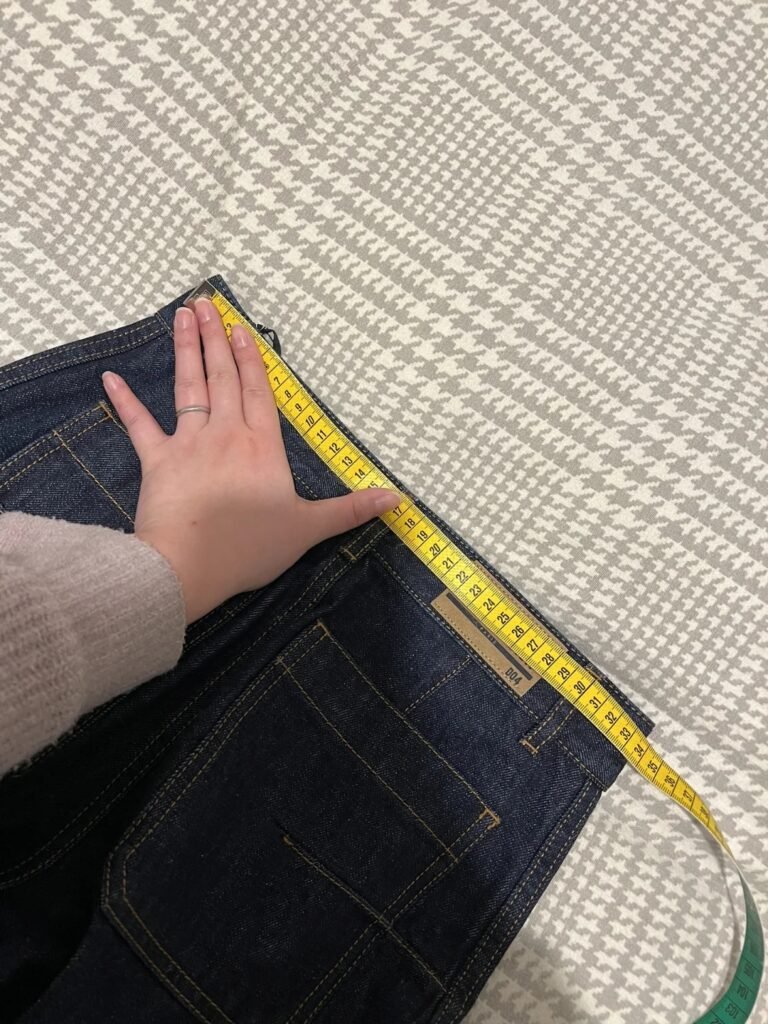
- A flexible measuring tape (cloth or plastic—do not use a metal tape measure).
- A mirror to check the tape alignment.
- Paper and pen to record your measurements.
- Tight-fitting clothing or undergarments to measure over (avoid bulky fabrics like denim or thick sweaters) .
Pro Tip: Measure in the morning before a meal to avoid bloating, and stand in your natural, relaxed posture .
Step-by-Step Guide to Measuring for a Vest
Different styles of vests prioritize different fit points. However, these are the core measurements you will need for almost any women’s vest in 2026.
1. Measure Your Bust (The Most Important Measurement)
The bust is the primary measurement for most vests, as it determines how the garment will close and drape across your upper body .
- Wear a well-fitting, non-padded bra .
- Stand straight with your arms relaxed at your sides.
- Wrap the tape around the fullest part of your bust (typically across the nipple line) and around your shoulder blades .
- Keep the tape parallel to the floor. Check in the mirror to ensure it isn’t dipping or rising at the back.
- The tape should be snug but not tight—you should be able to slip one finger between the tape and your body .
- Record this number.
2. Find Your Natural Waist
This is especially important for tailored or cropped vest styles that are designed to cinch in or end at the waist .
- Bend to one side to find the natural crease where your torso bends. This is your natural waistline, usually above the belly button and below the rib cage .
- Stand back up straight.
- Wrap the tape around this narrowest point, keeping it parallel to the floor.
- Breathe normally and do not suck in your stomach .
- Record this number.
3. Measure Your Hips
While not always necessary for all vests, the hip measurement is crucial for longer, “maxi-length” vest styles that are trending in 2026 . It also helps assess overall proportion .
- Stand with your feet together .
- Find the fullest part of your hips and bottom (usually 15–25 cm / 6–10 inches below your natural waist) .
- Wrap the tape around this widest part, ensuring it stays level and doesn’t ride up at the back .
- Record this number.
4. Shoulder Width (For Structured Vests)
This is vital for tailored or structured vests to ensure the shoulder seams sit correctly .
- This measurement is easiest with a friend’s help .
- Locate the bony points where your arms join your shoulders (the outermost tips).
- Have your friend measure straight across the back from one tip to the other, keeping the tape parallel to the floor .
- Record this number.
5. Vest Length (For Desired Coverage)
Determining your desired length helps you compare against product specifications, especially if you prefer a cropped fit or longer coverage .
- Use a ruler or measuring tape.
- Measure from the top of your shoulder (where a vest seam would sit) down to your desired hemline (e.g., mid-torso, at the hip bone, or lower) .
- Record this number.
How to Use Your Measurements: A 2026 Approach
Once you have your numbers, you cannot simply look for a tag that says your size. You must use them wisely.
Compare to Brand-Specific Size Charts
Always refer to the brand’s official size chart, not a generic one . Look for the “garment measurements” or “body measurements” section.
- Body measurements (like the Alpha Industries guide) tell you what body size the garment is designed to fit .
- Garment measurements tell you the actual dimensions of the vest. Compare these to your own body measurements plus your desired “ease.”
Understand “Ease” and Fit Types
Ease is the extra room a garment has beyond your body measurements. Your preferred silhouette determines how much ease you need .
What If You’re Between Sizes?
- For a compression or performance vest: If your bust measurement falls between sizes, consider your activity. For high-impact sports, size up for unrestricted breathing. For low-impact activities, you may prefer the tighter fit .
- For a structured fashion vest: If you plan to layer thick sweaters underneath, size up . If the fabric is rigid (like tweed) with no stretch, and you are between sizes, it is often safer to size up and have it tailored, as you cannot create room where there is none .
The “Water” Factor (For Water Sports Vests)
If you are measuring for a water sports or impact vest in 2026, remember that neoprene stretches 5–10% when wet. A vest that feels snug in the store is often the correct fit once you are on the water .
Common Measuring Mistakes to Avoid
- Pulling the tape too tight or leaving it too loose. The tape should sit against your skin without digging in .
- Measuring over bulky clothing. Always measure over thin layers or undergarments .
- Not keeping the tape level. A twisted or tilted tape will give an inaccurate reading .
- Holding your breath or sucking in. This leads to a vest that is too small and uncomfortable .
- Guessing your size based on previous purchases. Brands vary wildly; always re-measure and check the chart .
Final Thoughts: Fit Equals Confidence
In 2026, the perfect vest is the one that fits your body, not just the one that looks good on a model. Whether you are suiting up for the office in a tailored tweed vest or gearing up for an outdoor adventure, accurate measurements are the foundation of comfort and style .
Take the time to measure yourself today. Jot down your numbers, keep them in your phone, and shop with the confidence that your next vest will fit like it was made for you
Explore More Articles from WUYI Apparel
Want to learn more about styling essentials hoodies or other apparel tips? Check out some of our other helpful articles:
- Wearing Black to a Wedding: A Modern Etiquette Guide
- Rainwear Jackets: The Perfect Fusion of Fashion and Function
- How To Measure Clothes
- Casual clothing – Casual and elegant through everyday life
- How to Find Your Style:An in-depth exploration of one’s own clothing style
For more tips and tricks on fashion and lifestyle, don’t forget to visit our Blog Section.
Head over to our Shop Page to browse our full collection and pick your favorite essentials hoodie today!