Welcome to customize all kinds of clothing

How To Measure Clothes

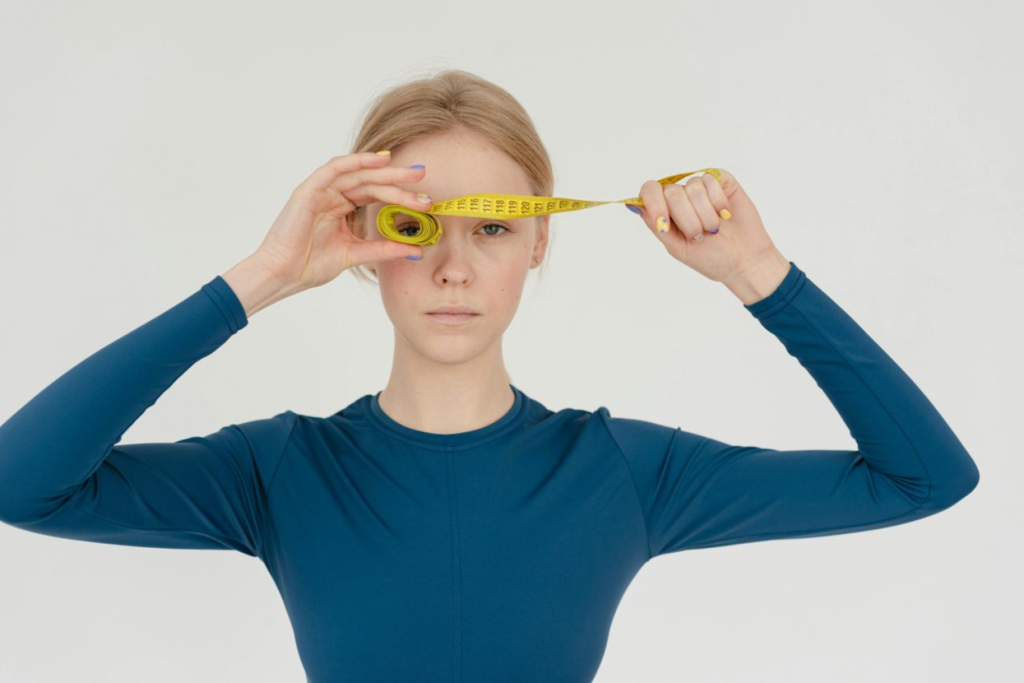
Alright, let’s dive into the wonderful world of measuring clothes! Get ready for a fun and (hopefully) not-too-confusing adventure in centimeters and inches. Whether you’re trying to find your perfect fit, launch your online fashion empire, or unleash your inner design guru, knowing how to measure clothes is your secret weapon.
A Fun Guide to Measuring Your Threads
Ever stared at a size chart and felt like you’re deciphering ancient hieroglyphics? Or maybe you’re dreaming of selling your vintage finds online but feel lost in a sea of numbers? Fear not fashion friend! Learning how to measure clothes doesn’t have to be a drag. Think of it as a mini treasure hunt, where the prize is perfectly fitting clothes, happy customers, or the satisfaction of a DIY masterpiece.
Why Bother with the Numbers?
Good question! Here’s the lowdown for all you curious cats:
- Finding Your Fit: Let’s be honest, vanity sizing is a fickle beast. What’s a “medium” in one store might be a “small” in another. Taking your own measurements empowers you to conquer those confusing size charts and snag clothes that actually fit and flatter. No more playing the guessing game (and the dreaded return shipping!).
- Becoming an Online Selling Superstar: Want to turn your closet clean-out into cash? Accurate measurements are GOLD for online listings. They give buyers the confidence to click “add to cart” knowing exactly what they’re getting. Plus, fewer returns mean happier customers and more jingle in your pocket. Win-win! Check out our detailed article on how to measure clothes for selling online.
- Unleashing Your Inner Fashion Alchemist: Dreaming of adding a personal touch to your wardrobe? Whether you’re hemming a dress, adding embellishments, or even drafting your own designs. Knowing how to measure clothes and capture the precise measurements of your base garments is crucial for a flawless final product.
Your Measurement Mission: Essential Tools
Before we embark on this numerical quest, gather your trusty tools:
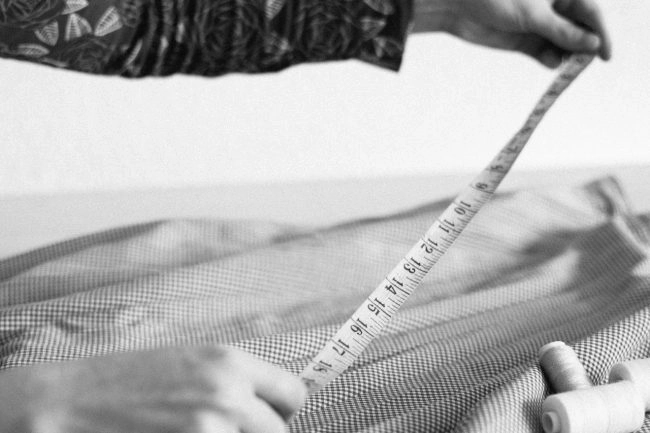
- A Flexible Measuring Tape: The soft, bendy kind that tailors use. Don’t try to use a metal ruler – unless you’re aiming for a very structured (and likely uncomfortable) outfit.
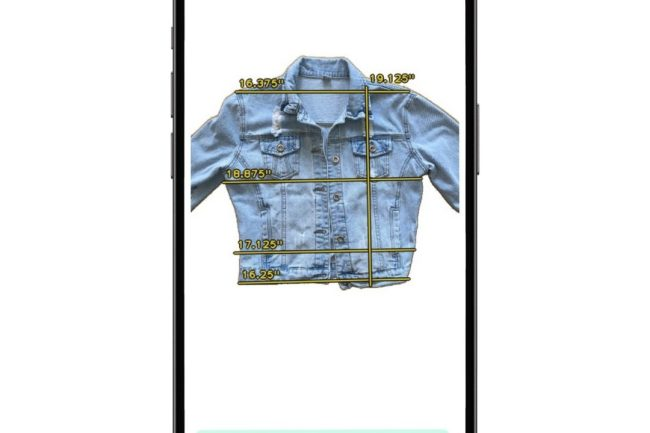
- Digital Measuring Tape: Tailored is a mobile app that measures clothes in photos. When you sign up for a Tailored account, it comes with a desktop app that allows you to upload multiple images at one time and adjust measurements.

- A Flat Surface: A table or the floor works perfectly. We need your garment to lay flat and relaxed for accurate readings.
- Patience (and maybe a sprinkle of humor): Sometimes fabric can be a little wiggly. Take your time and don’t get discouraged if it takes a couple of tries. Learning how to measure clothes is like riding a bike.
- A Notebook or Digital Device: To jot down your measurements. Future you will thank you!
Let’s Get Measuring: The Key Areas
Alright, fashion detectives, let’s get down to the nitty-gritty. Here are the common areas you’ll want to measure:
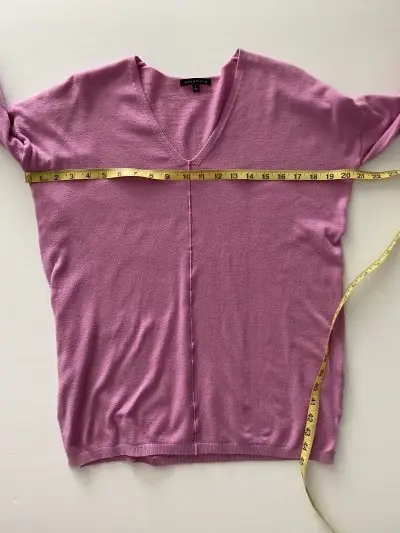
- Bust/Chest: For tops, dresses, and jackets. Lay the garment flat, face up. Measure straight across the fullest part of the bust/chest, from one armpit seam to the other. Double this number for the total circumference.
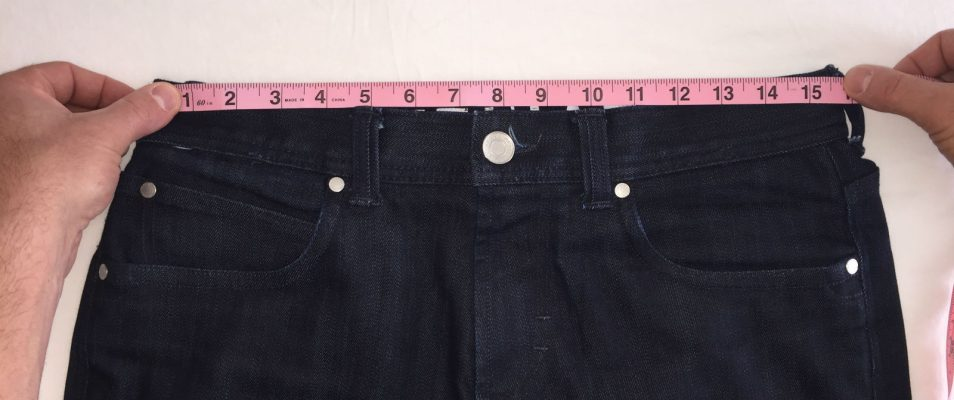
Waist: For tops, dresses, skirts, and pants. Find the natural waistline (usually the narrowest part of the torso). Lay the garment flat and measure straight across this point. Double the number for the total circumference. Pro Tip: If it’s a pair of pants or a skirt, measure across the top waistband.
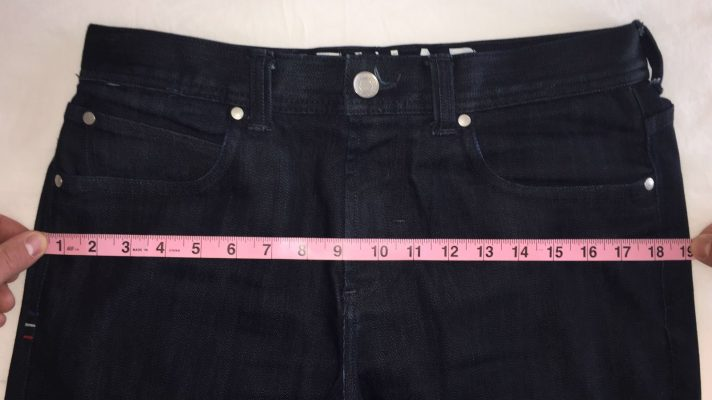
Hips: For pants, skirts, and dresses. Locate the fullest part of the hips, usually about 7-9 inches below the natural waist. Lay the garment flat and measure straight across this point. Double the number for the total circumference.
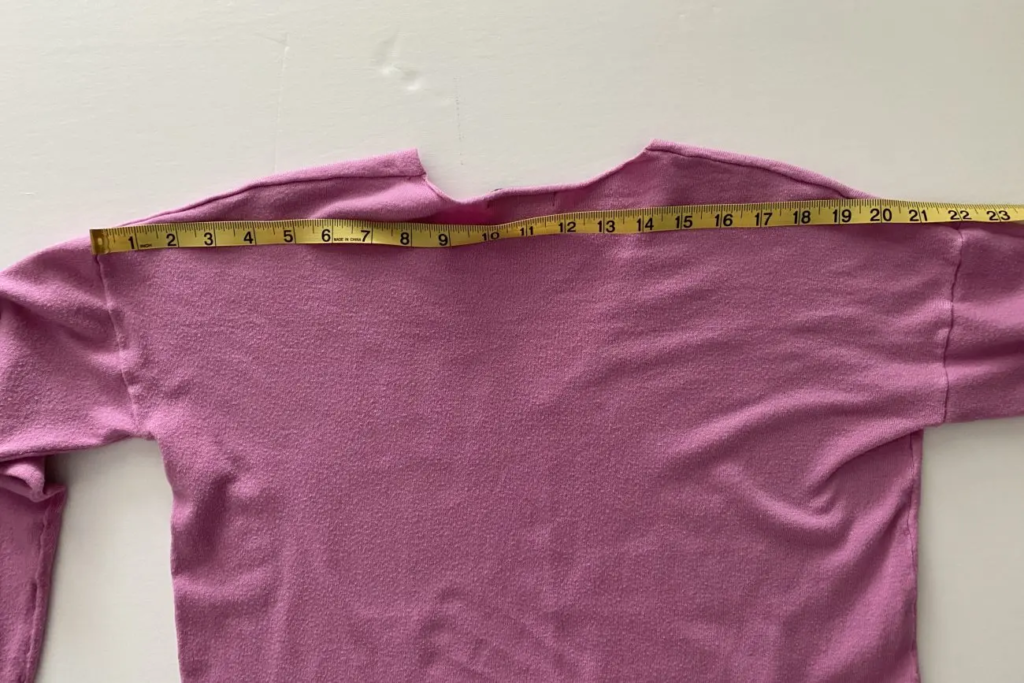
Shoulder to Shoulder: For tops, dresses, and jackets. Turn the garment face down. Measure straight across the back from the tip of one shoulder seam to the tip of the other.
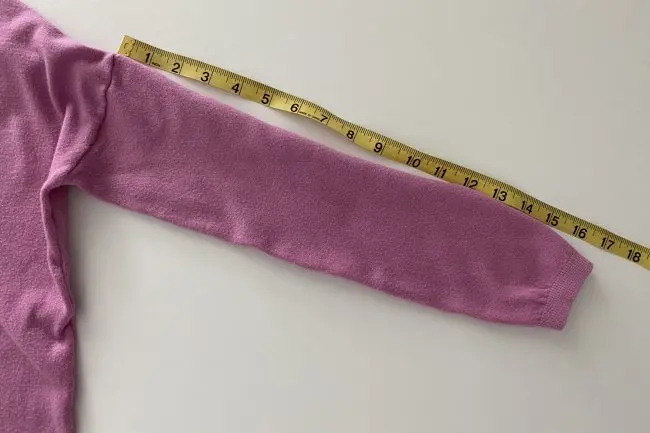
Sleeve Length: For long-sleeved items. Lay the garment flat, face up. Measure from the shoulder seam down to the end of the cuff.
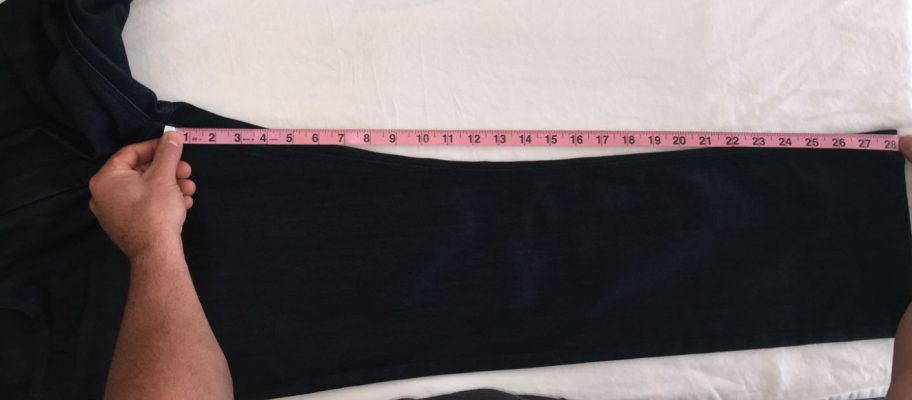
Inseam: For pants and jeans. Lay the garment flat, with the inner leg seam facing up. Measure from the crotch seam down to the bottom hem of the leg.
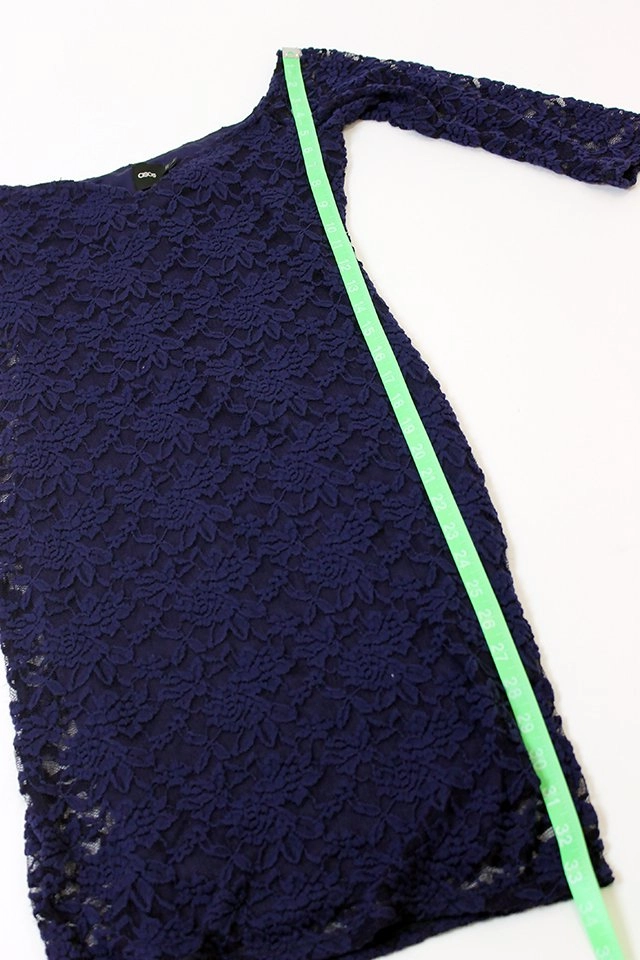
- Length: This one depends on the garment!
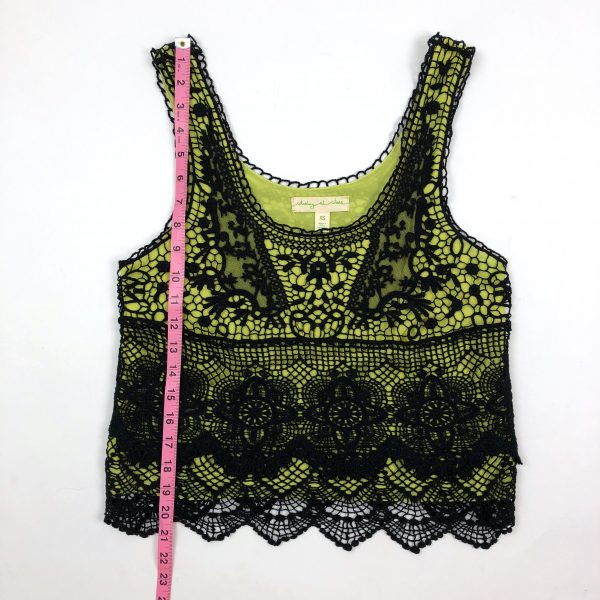
- Tops: Measure from the highest point of the shoulder (near the neckline) down to the bottom hem.
- Dresses: Measure from the highest point of the shoulder down to the bottom hem.
- Skirts: Measure from the top of the waistband down to the bottom hem.
- Pants: Measure from the top of the waistband down to the bottom hem (outseam).
Tips and Tricks for Measurement Mastery
- Be Gentle: Don’t stretch the fabric while measuring. Let it lie naturally.
- Measure Twice, Cut (or List) Once: It’s always a good idea to double-check your measurements to avoid errors.
- Note the Fabric: Stretchy fabrics will have different measurements when laid flat compared to how they fit when worn. Keep this in mind, especially when buying or selling.
- Specify Where You Measured: When listing items online, be clear about where you took each measurement (e.g., “Bust: 36 inches (measured flat)”).
- Embrace the Metric System (or Don’t!): If you’re selling internationally, it’s helpful to include measurements in both inches and centimeters. There are plenty of handy online converters if math isn’t your jam.
Decoding Dresses, Denim, and Beyond
While the basic principles of measuring remain the same, different garments have unique features that require a slightly different approach. Let’s break down some popular styles and pinpoint those crucial (and sometimes confusing) measurement zones.
Dress Dilemmas: Navigating Necklines, Hemlines, and Everything In Between
Dresses come in a glorious array of shapes and sizes, which can sometimes make measuring feel like navigating a fashion jungle. When learning how to measure clothes, these are some key areas that can be particularly important:
- Neckline Drop: This is especially relevant for lower-cut dresses. To measure, lay the dress flat and measure from the highest point of the shoulder (where the shoulder seam meets the neckline) straight down to the lowest point of the neckline. This helps buyers understand how revealing the neckline will be.
- Bodice Length: For fitted dresses, the length of the bodice (the part from the shoulder to the waist) is crucial for fit. Measure from the highest point of the shoulder down to the natural waistline seam (if there is one). If there isn’t a defined waist, estimate where the natural waist would fall.
- Skirt Length: This is straightforward but important! Measure from the natural waistline seam down to the bottom hem of the skirt. For empire waist dresses, measure from just below the bustline down to the hem. Always specify from where you’re measuring!
- Sweep or Hem Circumference: For dresses with fuller skirts (like A-line or circle skirts), measuring the circumference of the hem can give an idea of how much fabric there is and how the skirt will flow. Lay the dress flat and measure across the bottom hem, then double the measurement.
- Strap Length: For dresses with straps, measure from the point where the strap attaches to the front of the bodice, over the shoulder, to the point where it attaches to the back of the bodice. This is important for ensuring the straps aren’t too long or too short.
Problematic Areas & Pro Tips for Dresses:
- Asymmetrical Hems: For uneven hemlines, measure the shortest and longest points and note both.
- Draped or Cowl Necklines: These can be tricky to measure accurately when flat. You can try to gently smooth out the fabric as much as possible, but acknowledge that the measurement is an approximation. You might also describe how the drape falls.
- Bias-Cut Dresses: These dresses are cut on the diagonal and have a natural stretch. Measure them lying flat, but be aware that they will likely drape and fit differently on the body. Mentioning the fabric type (e.g., “silky bias-cut”) is helpful.
Decoding Denim: Mastering the Measurements of Your Favorite Jeans
Jeans are a wardrobe staple, and accurate measurements are key for finding that perfect fit.
- Waist: As mentioned before, measure across the top of the waistband and double it.
- Rise: This is the measurement from the crotch seam up to the top of the waistband.
- Front Rise: Measure from the crotch seam up the front to the top of the waistband.
- Back Rise: Measure from the crotch seam up the back to the top of the waistband. Back rise is usually longer than the front rise.
- Inseam: We covered this earlier – from the crotch seam down the inside of the leg to the hem.
- Leg Opening (or Cuff Opening): Measure across the bottom hem of one leg. This indicates how wide or narrow the leg opening is.
- Thigh: Measure across the widest part of the thigh, usually a few inches below the crotch. Double this for the circumference.
Problematic Areas & Pro Tips for Jeans:
- Stretchy Denim: Like bias-cut dresses, stretchy jeans will measure smaller when flat than when worn. Note the fabric content (e.g., “98% cotton, 2% spandex”) to give buyers an idea of the stretch.
- Curved Waistbands: Lay the waistband as flat as possible when measuring the waist, but acknowledge the curve if it’s significant.
Global Garments: Exploring Measurements Across Cultures
Let’s take a peek at how to approach measurements for some popular garments from around the world:
- Men’s Arabic Thobe/Dishdasha: This traditional garment is typically loose-fitting, but key measurements are still important, especially for online sales or custom tailoring.
- Shoulder Width: Measure straight across the back from one shoulder seam to the other.
- Chest: Measure across the fullest part of the chest, from one armpit seam to the other, and double it.
- Sleeve Length: Measure from the shoulder seam down to the end of the cuff.
- Overall Length: Measure from the highest point of the shoulder (near the neckline) straight down to the bottom hem.
- Neck Circumference: Measure around the neckline. This is crucial for comfort.

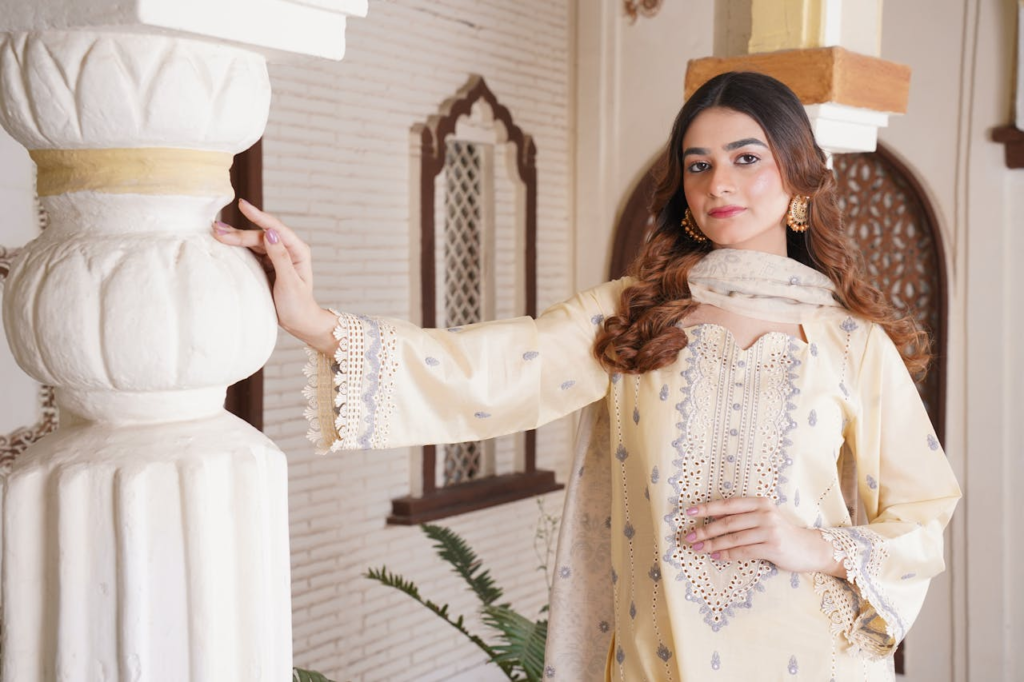
- Indian Salwar Kameez: This outfit typically consists of a tunic (kameez) and trousers (salwar).
- Kameez (Tunic): Measure bust, waist, hips, shoulder width, sleeve length, and kameez length (from the shoulder to the hem) as described for dresses and tops.
- Salwar (Trousers): Measure the waist (of the drawstring or elastic), hip circumference, inseam, and the length from the waist to the ankle. The leg opening (bottom hem) is also important, especially for different styles of salwar (e.g., narrow or wide).

- Japanese Kimono: This traditional robe has a unique construction.
- Yuki (Sleeve Length from Center Back): Measure from the center of the back neckline down to the end of the sleeve. This is a key measurement for kimono.
- Mitake (Body Length): Measure from the shoulder down to the bottom hem.
- Sodetake (Sleeve Drop): Measure from the top of the shoulder down to the bottom edge of the sleeve.
- Maehaba (Front Width): Measure one front panel’s width.
- Ushirohaba (Back Width): Measure across the back panel.

General Tips for Global Garments:
- Research Specific Styles: If you’re dealing with unfamiliar garments, do a little research online to understand their key features and common measurement points.
- Look for Existing Size Charts: If you’re selling these items, try to find standard size charts for that particular garment type as a reference.
- Be Descriptive: Clearly label each measurement and explain where it was taken. Photos of how you measured can also be incredibly helpful for buyers.
By paying attention to the specific details of each garment type, you’ll be well-equipped to provide accurate measurements, leading to happier customers, better-fitting clothes, and a more confident approach to your fashion endeavors!
Explore More Articles from WUYI Apparel
Want to learn more about styling essentials hoodies or other apparel tips? Check out some of our other helpful articles:
- How to Find Your Style:An in-depth exploration of one’s own clothing style
- How to design a hoodie?“From Classic Silhouettes to Cultural Declarations”
- How much does a hoodie weigh?“The Weight of the Hoodie: Weighing the Era in the Fiber”
- How to wash essentials hoodie?“The gentle art of rebirth for hoodies: a wash, a healing experience”
- Why wash hoodie inside out?
For more tips and tricks on fashion and lifestyle, don’t forget to visit our Blog Section.
Head over to our Shop Page to browse ou