Welcome to customize all kinds of clothing


How to design a hoodie?“From Classic Silhouettes to Cultural Declarations”

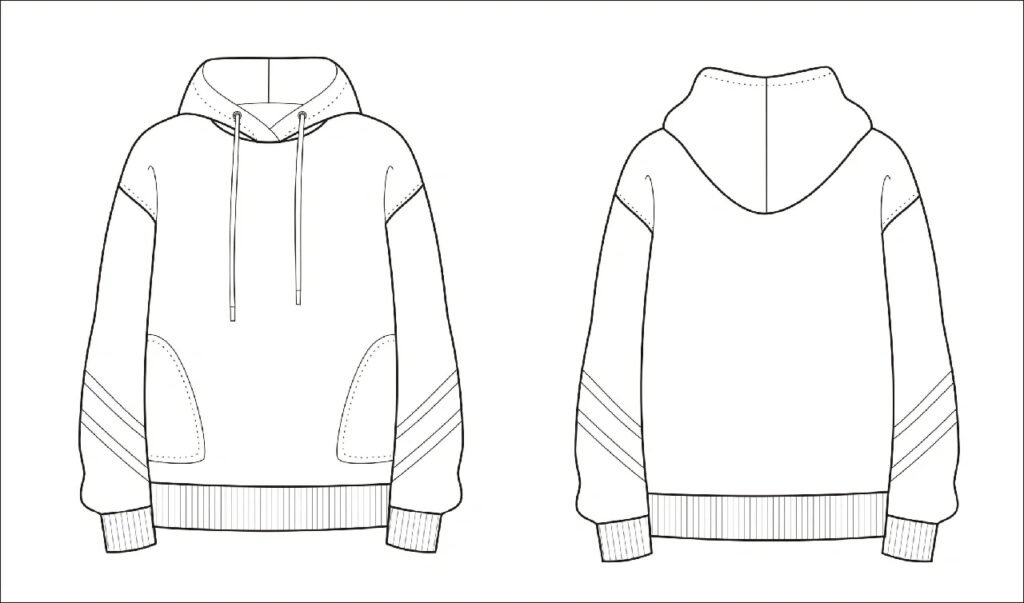
On the streets of New York’s SoHo or in the vintage markets of London’s East End, the hoodie has long transcended its original function as sportswear. It’s like a moving canvas, carrying the weight of personal identity, subcultural belonging, and the spirit of the times. From Ralph Lauren’s preppy polo shirts to Virgil Abloh’s arrow logo for Off-White, a successful hoodie design is a complex interweaving of practical aesthetics, cultural resonance, and exquisite craftsmanship. Designing a hoodie that resonates is far more than simply choosing colors and prints; it’s a creative act of engaging in dialogue with history, understanding the pulse of the present, and anticipating future trends.
I. Foundation: Silhouette, Fabric, and Details Beyond Comfort
All exceptional design begins with a profound respect for the fundamentals. The foundation of a sweatshirt lies in its silhouette, fabric, and construction—elements that collectively determine its feel, drape, and relationship with the body.
Shrinkage is a silent language. The classic crewneck sweatshirt conveys simplicity and timelessness, perfect for layering. The hoodie exudes a relaxed rebelliousness; its hood provides privacy and protection, making it a natural embodiment of street culture. Oversized cuts, inspired by 90s hip-hop culture, showcase a confident ease and attitude; conversely, a fitted silhouette leans towards modern and urban. Shoulders dropped or straight? Length reaching the waist or past the hips? Every proportional decision conveys a different identity to the wearer.
Fabric is the medium of emotion. Half the soul of a sweatshirt resides within its fabric. Heavyweight cotton fleece (typically over 300 grams per square meter) is a guarantee of quality, offering a solid structure, warm comfort, and a unique aged look over time. Today, sustainability is an indispensable dimension. Eco-friendly fabrics such as organic cotton, recycled polyester (like rPET extracted from ocean plastic bottles), and Tencel-cotton blends are not only ethical choices but also part of the brand narrative. Fabric treatment is equally crucial: washing imparts a vintage, soft hue and a supple feel; undyed natural fabrics showcase a raw and rustic texture.
True magic often lies in the details. The elasticity and density of ribbed edges determine whether the collar, cuffs, and hem are durable and maintain their shape. Hidden zippered pockets, ergonomic drawstring hoods, and internal headphone jacks—these seemingly minor design elements greatly enhance functionality and user experience. Even the color and stitch density of the seams are silent declarations of quality.
II. Visual Language: The Art of Graphics, Color, and White Space
Once a solid foundation is established, the visual narrative takes center stage. The front and back of the hoodie serve as the designer’s central canvas for expression.
Graphic design is the brand’s mouthpiece. It can be a bold brand identity—like Champion’s iconic “C” logo on the left chest or Supreme’s red square logo—its power lies in the symbolic worship born from minimalism and repetition. It can also be a dynamic artistic motif, such as Basquiat-esque graffiti, retro band album covers, or original works by contemporary illustrators. Furthermore, slogans possess a direct power, from Vivienne Westwood’s punk chants to concise phrases expressing social issues; words can instantly transform a hoodie into a mobile manifesto. The key is balance: the size, position, color, and overall silhouette of the graphic must coexist harmoniously to avoid visual overload.
Color psychology is a dialogue with the subconscious. Color selection is never arbitrary. Neutral tones of black, white, and gray form a timeless wardrobe foundation with unparalleled versatility. Earth tones (olive green, camel, terracotta) echo natural and retro aesthetics. High-saturation bright colors (electric blue, fluorescent pink) or the year’s trending colors quickly attract attention, expressing vitality and attitude. The emotional connection of color is profound and direct; designers must consider its meaning in different cultural contexts.
Perhaps the highest level of design wisdom lies in understanding the use of negative space. A high-quality, solid-color sweatshirt without any front print, winning with its pure material and cut, achieves a different kind of understated confidence. It leaves ample room for the wearer’s personal style to express itself, embodying the timeless philosophy of “less is more.”
III. From Samples to Cultural Symbols: Context, Narrative, and Community
The journey of a hoodie begins only after its design is completed in the studio. Whether it transcends a product to become a cultural symbol depends on the context and narrative it’s embedded in.
Constructing a Context and Story: Designers or brands need to breathe soul into this hoodie. Where does it draw inspiration? A late-night movie, a desert trip, or a tribute to a retro sports era? Build a complete worldview through lookbooks, short films, and social media content. Have models wear it in specific settings—perhaps in front of a concrete wall in Berlin, or on a sunset beach in California—to evoke emotional resonance and desire in the target audience.
Embracing Crossovers and Communities: Contemporary hoodies often become excellent vehicles for crossover collaborations. Partnering with a respected artist, an independent band, or even an environmental organization can instantly merge audiences, injecting fresh storytelling and a sense of scarcity. More importantly, true cultural influence stems from community-driven approaches. Observe the most representative streetwear brands; they don’t simply “push” products to the market, but rather deeply root themselves in skateboarding, hip-hop, and art communities, gaining recognition and endorsement from within. When key opinion leaders (KOLs) spontaneously wear a sweatshirt, its persuasive power far surpasses any advertising.
Ultimately, a successful sweatshirt design achieves a delicate balance between classic and contemporary, commercial and craftsmanship, individuality and belonging. It’s a garment that can accompany the wearer for years; with each wash, the color fades slightly, the fabric becomes softer, and it carries personal memories and stories. It’s no longer just a top, but a fragment of the wearer’s identity, a vehicle for connecting and conversing with the wider world. In this sense, designing a sweatshirt is designing a wearable, warm, modern totem.
Explore More Articles from WUYI Apparel
Want to learn more about styling essentials hoodies or other apparel tips? Check out some of our other helpful articles:
- Purple Hoodie 2026: Trends, Styling Tips & Must-Have Picks for Every Wardrobe
- The Epstein Hoodie: Understanding the 2026 Controversy
- Graphic Hoodie 2026: Trends, Designs & Styling Guide for the Modern Wardrobe
- Your Complete Guide to Custom Hoodies in 2026: Design, Trends, and Quality
- The Black Hoodie: Your Ultimate Guide to Styling, Quality, and Care
For more tips and tricks on fashion and lifestyle, don’t forget to visit our Blog Section.
Head over to our Shop Page to browse ou