Welcome to customize all kinds of clothing

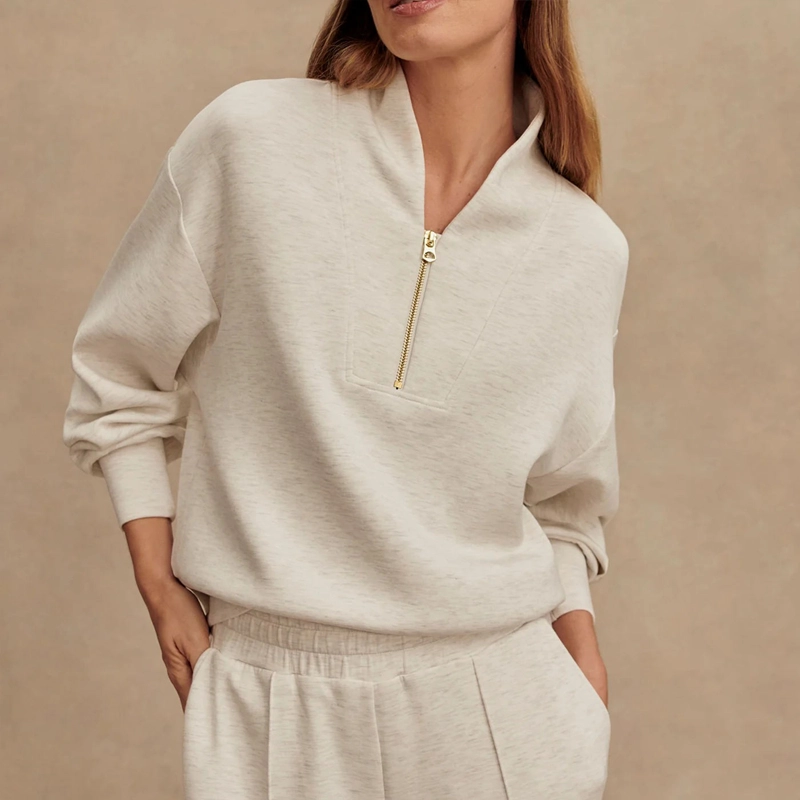
French Terry vs Fleece: What’s the Difference and Which Hoodie Fabric Is Better?

Where These Two Fabrics Come From
Have you ever wondered why some sweatshirts feel smooth and lightweight while others are soft and heavy? They look completely different. But here is something you might not know: they start out as the same thing.
There is a great saying in the textile world: “It’s the same dog, just a different haircut.”
French terry and fleece are made on the same knitting machines. Both come off the machine with loops on the surface. The difference happens after that. French terry stays as it is. Fleece goes through a process called “brushing” — wire brushes comb through the loops, breaking them open and creating a soft, fuzzy surface.
The Key Difference in Production
Think of it like hair. You can wear it smooth and straight, or you can fluff it up into curls. Same hair, different style. Same fabric, different finish.
French terry: One side is smooth. The other side has loops. Weight is usually between 220 and 300 GSM. The loops stay intact, leaving space for air to move.
Fleece: The loops get brushed open into fuzzy fibers. Weight is heavier, usually between 280 and 360 GSM. The fuzzy surface traps air, creating insulation.
Why This Choice Matters
Picking the wrong fabric can make your hoodie feel like a mistake for years.
If you choose wrong, you might run into problems like these:
- Wearing it outside in winter and freezing
- Sitting in the office and sweating through your back
- Seeing pills form under your backpack straps after a few months
- Finding it shrunk or stretched after a few washes
Choose right, and you end up with a piece you reach for again and again. Spring and fall, indoors and outdoors, layering or wearing alone — one piece handles it all.
Here is a real example. Sarah commutes by bike every day. She owns both a french terry hoodie and a fleece one. After three months, the fleece one started pilling where her backpack straps rubbed. After six months, the cuffs were loose and the surface looked fuzzy. The french terry one? After a full year, it still held its shape and color.
How to Tell Them Apart and Choose
Step 1: Look at the Look and Feel
| Feature | French Terry | Fleece |
|---|---|---|
| Surface | Smooth on one side, loops on the other | Fuzzy inside or on both sides |
| Feel | Smooth, dry, airy | Soft, fluffy, cozy |
| Thickness | Medium | Heavy |
| Weight | 220–300 GSM | 280–360 GSM |
Run your hand over the inside. If you feel loops, it is french terry. If it feels like a stuffed animal, it is fleece.
Step 2: Understand the Air and Heat Balance
This is the biggest difference between the two.
Lab tests show:
- French terry lets air pass through at 85–110 mm/s
- Fleece lets air pass through at only 15–30 mm/s
In simple terms, french terry is about four times more breathable than fleece.
What this means for you:
- French terry works well for: spring and fall, office with heating, exercise, mild weather
- Fleece works well for: winter outdoors, very cold weather, sitting still
A fabric expert points out that fleece creates a “greenhouse effect” indoors — your body heat gets trapped and cannot escape. If you sit in a heated office all day, fleece can leave you feeling damp and uncomfortable.
Step 3: Think About Durability
If you want a hoodie that lasts for years, french terry is the smarter pick.
| Factor | French Terry | Fleece |
|---|---|---|
| Resistance to pilling | High | Medium to low |
| Keeps its shape | Good | Medium |
| When pilling starts | After long use | 6–12 months |
Fleece pills easily where it rubs against backpack straps, seat belts, or armrests. Once pilling starts, it is hard to reverse.
A fabric scientist puts it this way: “Fleece wins on warmth but loses on longevity. For year-round wear and long life, french terry is the better investment.”
Step 4: Match It to Your Life
| Scenario | Best Choice | Why |
|---|---|---|
| Daily commute (office) | French terry | Breathable, won’t overheat, looks clean |
| Weekend casual | Either | Depends on weather and preference |
| Exercise or gym | French terry | Wicks sweat, breathes |
| Winter outdoors | Fleece | Traps heat |
| At home (heated room) | French terry | Won’t make you sweat |
| At home (unheated) | Fleece | Keeps you warm |
| Spring and fall | French terry | Lightweight, not too warm |
| Travel (varied weather) | French terry | Handles more conditions |
| Layering under something | French terry | Thin, won’t add bulk |
| Worn as an outer layer | Fleece | Thick, warm |
Step 5: Consider the Environmental Side
If you care about the planet, french terry usually comes out ahead.
- French terry is mostly cotton — a natural fiber that breaks down over time
- Fleece is mostly polyester — a synthetic fiber made from oil that does not break down, and it releases tiny plastic pieces when washed
That said, there is also recycled fleece (rPET) made from plastic bottles. It is better for the environment than regular polyester. Look for labels that say “recycled polyester” if you go with fleece.
Who Should Pay Attention
| Who | Why It Matters |
|---|---|
| Office workers | Breathability indoors directly affects comfort |
| Outdoor enthusiasts | Wrong fabric means being too hot or too cold |
| People in four-season climates | Need one fabric that handles different weather |
| Anyone who sweats easily | Fleece’s “greenhouse effect” makes things worse |
| People who value durability | Do not want pilling after six months |
| Environmentally conscious buyers | Natural vs synthetic fibers matter |
Common Mistakes and Questions
Common Mistakes
| Mistake | What to Do Instead |
|---|---|
| Wearing french terry outside in winter | French terry is for mild weather; fleece handles the cold |
| Wearing fleece indoors all day | You will overheat; switch to french terry |
| Wearing fleece for exercise | It traps sweat; french terry breathes |
| Thinking fleece lasts longer | French terry is more durable |
| Treating all “fleece” as the same | French terry and fleece are different fabrics for different needs |
Frequently Asked Questions
Q: Which is warmer, french terry or fleece?
A: Fleece is warmer. The brushing process creates air pockets that trap body heat. French terry is more breathable but less insulating. Wear fleece when you go outside in winter. Wear french terry when you are indoors.
Q: Which lasts longer?
A: French terry lasts longer. Fleece pills easily on high-friction areas like backpack straps and cuffs, usually within 6 to 12 months. French terry can go for years.
Q: Why are some fleece hoodies expensive and others cheap?
A: Quality matters. Higher-quality fleece uses finer polyester fibers that pill less. Cheaper fleece uses coarse fibers that pill after a few washes. Brand name also adds to the price.
Q: I live in a warm climate. Which should I choose?
A: French terry. It gives you enough warmth for mild winters without making you sweat indoors.
Q: I live in a cold climate. Which should I choose?
A: Fleece. If winters are very cold, you may want fleece plus a jacket over it. French terry will not keep you warm enough.
Q: Does french terry shrink?
A: If it has a high cotton content, it may shrink 3–5% in the first wash. Wash in cold water and air dry to control shrinkage. Fleece does not shrink much.
Q: Does fleece pill?
A: Yes. Backpack straps, seat belts, and cuffs are the worst spots. Turning it inside out, using a laundry bag, and air drying can slow it down.
Q: Which is more eco-friendly?
A: French terry is usually more eco-friendly because it is mostly cotton, a natural fiber that breaks down. Fleece is polyester, which does not break down and sheds tiny plastic pieces. Recycled fleece (rPET) is a better option if you choose fleece.
Q: I want both. How should I decide?
A: If your budget allows, one french terry hoodie (for mild weather, indoors, exercise) plus one fleece hoodie (for winter, outdoors) is a perfect pair. If you only buy one, think about where you live and how you will use it most.
Q: How can I tell which fabric a hoodie is made from?
A: Check the tag. It will list the fabric type and materials. Feel the inside—loops mean french terry; fuzzy means fleece. Flip it inside out and look. Loops or fuzz — that is your answer.