Welcome to customize all kinds of clothing

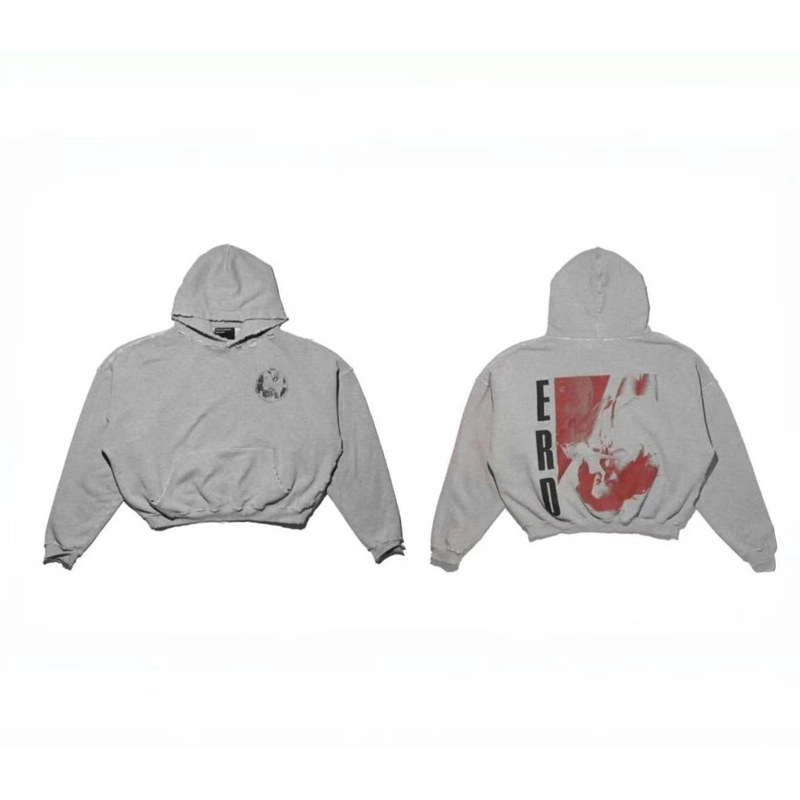
Why Is the Zip-Up Hoodie Down 10% in the South? Unpacking the Regional Dip

You have seen the data. The zip-up hoodie—that streetwear essential—is reportedly seeing a 10% dip in search interest in the American South. If you are a reseller or a brand manager watching regional analytics, this might look like a warning sign.
Is the hype for zips dying in places like Atlanta, Dallas, or Nashville?
The honest answer is no. The 10% dip is not a brand failure or a rejection of the product. Instead, it is a combination of climate, shifting retail math, and the natural cooling of a market that matured faster in warmer regions. Let me break down exactly why the Southern market is cooling off while the rest of the country remains steady.
Part 1: The Climate Conundrum – A Heavyweight Problem
The most obvious factor is the weather. The South is hot. The “classic” hoodie is built for the North.
The 400-Gram Problem
Premium zip-up hoodies, particularly from brands like Fear of God Essentials, are defined by their weight. These garments typically utilize a 380gsm to 480gsm cotton-polyester fleece. This heavy fabric provides the structure and “quiet luxury” feel that consumers love. They are designed to have a “substantial” hand feel.
For someone in Chicago or New York, that extra weight is warmth. For someone in Atlanta or Houston, that 400gsm fabric feels like a sauna for nine months of the year. A lightweight budget hoodie at 250gsm is far more practical in warm climates.
Shorter Utility Windows
In the Northern states, a heavyweight zip-up hoodie serves as a viable outer layer for 6 to 7 months. In the Deep South, the window where a 400-480gsm fleece is comfortable might be only 2 to 3 months. If you are a consumer in the South, your “need” for a hoodie in June is practically zero. Consequently, search volume drops because there is no urgency to buy.
The 2026 Fabric Shift
The 2026 drops from major brands like Fear of God have actually shifted toward heavier fleece weights and more structural silhouettes than previous seasons. While this drives hype in cooler markets, it inadvertently widens the gap for Southern consumers who are looking for lighter layering options. The product is moving further away from what the Southern climate demands.
Regional Temperature Impact on Hoodie Demand
| Region | Months of Hoodie Comfort | Typical Winter Temperature |
|---|---|---|
| Northeast (NY, Boston) | 6-7 months | 20-40°F |
| Midwest (Chicago) | 6-7 months | 15-35°F |
| South (Atlanta, Dallas) | 2-3 months | 35-55°F |
| Deep South (Florida, Houston) | 1-2 months | 45-65°F |
The Weight Comfort Scale
| Fabric Weight | Best Temperature Range | Feel |
|---|---|---|
| 250-280 GSM (lightweight) | 55-70°F | Breathable, good for layering |
| 280-320 GSM (midweight) | 45-60°F | Balanced, all-purpose |
| 320-380 GSM (heavyweight) | 35-50°F | Substantial, structured |
| 380-480 GSM (ultra-heavy) | 20-40°F | Very warm, dense fleece |
For Southern winters (typically 40-60°F), a midweight hoodie of 280-350 GSM is sufficient. Heavyweight fleece at 400+ GSM will be too warm except for the coldest days. French terry construction is more breathable than brushed fleece, making it better suited for the South‘s variable winters.
Part 2: Retail Scarcity vs. Reseller Predation
Why would Southerners stop searching for a product? Often, it is because they cannot find it at a fair price, or the supply chain has failed them.
The US Retail Allocation Disparity
Streetwear drops are not distributed evenly. Data from the April 2026 Core Collection drop reveals that US-based retail giants like PacSun and Nordstrom receive the lion‘s share of the inventory. This includes exclusive Earth-tone colorways that never even appear in European or Asian boutiques. While this benefits the US overall, physical retail presence in the South can be sparser than in the Northeast or West Coast.
The Regional Markup Reality
If local supply is limited, buyers turn to the secondary market. However, data shows that even within the US, regional price disparities exist. For the average consumer looking at resale, markups are brutal. Local boutiques in regions with less access often apply heavy markups to cover their own overhead.
In the Philippines—a tropical country with similar weather patterns to the South—local resellers often list hoodies at 300% of their retail value. If Southern shoppers open Instagram or resale sites and see a $100 hoodie listed for $280 by local resellers in their state, they simply stop searching. The price shock acts as a conversion killer.
The Economics of Reselling
Platform fees further exacerbate the issue. Popular reselling platforms like StockX, GOAT, and Grailed charge transaction fees that can be as high as 9.5%, plus a payment processing fee of around 3%. Selling a hoodie for $190 means the seller loses approximately $19.50 in fees alone.
For Southern resellers facing slower inventory turnover due to lower local demand, these fees eat an even larger portion of their margins. Many casual resellers have simply stopped flipping Essentials hoodies in the South because the math no longer works.
Regional Price Disparity Table
| Region | Retail Price (USD) | Typical Resale (USD) | Premium |
|---|---|---|---|
| US (direct retail) | $100-130 | N/A | 0% |
| South (local resale) | N/A | $200-300 | 100-130% |
| International (resale) | $100-130 + shipping | $250-400 | 150-200% |
| Philippines (local) | N/A | $400+ | 300%+ |
Part 3: The Saturation of the Aesthetic
When a style becomes a uniform, the urgency to find new drops drops drastically.
The “Quiet Luxury” Saturation Point
The zip-up hoodie—specifically the minimalist, oversized silhouette—has peaked in terms of adoption. By 2026, the Essentials hoodie had crossed into mainstream casualwear across every demographic, from college students to remote workers. In fashion-forward Southern cities, the “uniform” is already everywhere. When everyone already owns three beige hoodies, the demand for the “latest drop” diminishes.
Quiet luxury, defined by restraint, material excellence, and the rejection of overt branding, emerged as a reaction to logo-saturated maximalism. But by 2025, it risked becoming aesthetic monotony rather than sophistication. The more quiet luxury spread, the less distinctive it became.
The Shift to “Expressive Refinement”
What is replacing strict minimalism is something analysts call “expressive refinement”—retention of high-quality materials with the introduction of controlled visual interest and greater emphasis on individuality.
While the 2026 releases (such as the Dusty Rose and Sandstone colorways) are still generating hype, these are primarily aesthetic updates, not functional innovations. For the budget-conscious Southern buyer, the difference between “Oatmeal” from last year and “Sandstone” from this year is negligible, especially when the temperature outside is 85°F.
The Dupe Economy
Because the style is defined by neutral colors and no logos, it is incredibly easy for fast fashion brands (Zara, H&M, Amazon) to copy the look. Why would a casual consumer in Texas pay $130 for an authentic hoodie plus shipping, when a $40 dupe arrives tomorrow via Prime? In price-sensitive markets, the “dupe culture” often cannibalizes the high-end search traffic.
The “Streetwear Uniform” Saturation by City
| City | Oversized Hoodie Adoption | Saturation Level | Notes |
|---|---|---|---|
| Atlanta, GA | Very high | High | Major streetwear hub |
| Dallas, TX | High | Moderate-High | Growing market |
| Houston, TX | Moderate | Moderate | More diverse fashion scene |
| Miami, FL | Low-Moderate | Low | Climate-driven |
| Nashville, TN | Moderate | Moderate | Emerging scene |
| Charlotte, NC | Moderate | Moderate | Steady growth |
Part 4: The Natural Cooling of the Resale Market
The zip-up hoodie is no longer a “get rich quick” scheme for resellers. The market has matured.
The Reseller Math Has Changed
The days of 200% markups on every single Essentials hoodie are fading. Data from 2026 indicates that while core neutral colorways maintain their value close to retail, seasonal colors are seeing more variable resale behavior. The margins are compressing.
A typical resale calculation for a $100 hoodie now looks like this:
| Cost Component | Amount (USD) |
|---|---|
| Initial purchase | $100 |
| Shipping fees | $10 |
| Platform fees (StockX/Grailed) | ~$15 |
| Packaging costs | ~$5 |
| Total cost | ~$130 |
| Typical resale price | $170-190 |
| Net profit | $40-60 (23-31% margin) |
A 23-31% margin sounds healthy, but when you factor in the time spent hunting drops, managing listings, and the risk of unsold inventory, the appeal fades for casual resellers.
Burnout and Inventory
When resellers in the South cannot flip inventory within 48 hours—due to slower regional turnover—they stop hunting for the drops. The “Wild West” phase of the hoodie market is over, replaced by a more professional—and thus less frantic—secondary economy.
The correction came hard for many mid-tier hype labels between 2022 and 2024. Brands whose value proposition was primarily scarcity had nothing underneath it once the frenzy cooled.
Consumer Maturation
The streetwear consumer in 2026 is more informed, more selective, and more resistant to hype mechanics than at any previous point in the culture’s history. They‘re asking different questions now—not “how hard is this to get” but “how is this made, how long will it last, and does this actually look good in two years.”
Part 5: The “Ink” and Exclusivity Shift
Curiously, one of the biggest drivers of the 2026 market has actually been regional exclusivity, which contributes to the “dip” in specific regions.
The Ink and Dusty Rose Colorway Effect
The Spring 2026 ‘Dusty Rose’ and ‘Ink’ colorways were massive hits. However, data shows that these specific pigments were initially restricted to US-based retailers like PacSun and SSENSE. While this creates massive search volume in the US generally, if you are in the South looking for that specific high-demand item, you might simply be finding “Out of Stock” messages.
Why This Matters for the Data
If a significant portion of “Zip-up hoodie” searches are for specific hot items, and those items are sold out in the South (while available in NYC or LA due to different foot traffic or faster sell-outs), the algorithm registers a “dip” in intent. It is not that Southerners don’t want it. It is that the supply pipeline failed to reach them efficiently compared to Northern hubs.
Regional Exclusivity Impact Table
| Drop | Regional Restriction | Impact on South |
|---|---|---|
| Spring ‘26 Ink/Dusty Rose | US retailers only | Sold out faster in East Coast hubs |
| ‘Lichen’ Earth Tone | PacSun exclusive | Limited distribution in some areas |
| Core Collection neutrals | Widely available | Stable demand across all regions |
Part 6: What‘s Actually Replacing the Hype? (The 2026 Shift)
The 10% dip in the South is not happening in isolation. It is part of a broader cultural shift in streetwear that affects how—and where—consumers search for hoodies.
The Quiet Streetwear Evolution
Streetwear went quiet. Not dead. Quiet. The shift is not streetwear becoming luxury. It is streetwear borrowing luxury’s grammar. Oversized silhouettes remain—the boxy shoulder, the dropped hem—but they’re executed in better fabrics, with cleaner construction, without the branding on the chest that announces what you paid.
Status is communicated through material knowledge, not logo recognition. GSM ratings, fill power, seam construction, fabric composition—these terms have moved from technical specifications into common consumer vocabulary.
Why This Affects Search Volume
When the primary signal was logo and brand affiliation, consumers searched for specific brands (Essentials, Sp5der). That drove high search volume. When the signal shifts to product specification—400gsm heavyweight fleece, loopwheel construction, Japanese selvage—consumers search for product attributes, not just brand names.
This shift in search behavior can appear as a “dip” for specific branded queries, even when overall interest in the product category remains strong.
Quality as the New Status Signal
A 400gsm heavyweight hoodie with minimal branding reads differently from a 240gsm one with a large logo, and the community increasingly knows the difference. The brands gaining cultural ground are the ones that lead with product specification rather than hiding it.
For consumers, the practical implication is a shift in how to shop: fewer pieces, better made, chosen for longevity rather than immediacy. A wardrobe built around five or six genuinely excellent pieces in regular rotation rather than twenty mediocre ones is both more sustainable and more stylistically coherent.
The Bottom Line on the Shift
This is not streetwear dying. Anyone telling you streetwear is dying is confusing the death of a particular economic model—the hype cycle, the drop culture, the resale premium—with the death of the culture itself. The culture is fine. What’s dying is the version of streetwear that was primarily about access and exclusivity rather than about how things are made and what they mean.
Part 7: Frequently Asked Questions
Is the zip-up hoodie trend actually dying in the South?
No, the data suggests the market is stabilizing, not dying. The speculative frenzy that characterized 2020-2022 has cooled, which is normal and healthy for any brand. The hoodie has simply transitioned from hyped drop to wardrobe staple. In the South, that just means people are wearing the ones they already have rather than buying new ones in summer.
Are heavy hoodies just the wrong product for the South?
Yes, physically speaking. The 400-480 GSM fleece used in premium hoodies is designed for warmth. This is fantastic for winter but feels oppressive in humid, warm climates. This is not a brand problem—it is just geography.
Does the price of reselling affect the South more?
Absolutely. Regional price sensitivity is higher in some Southern demographics. When retail prices are stable ($90-$120) but local resellers push prices to $200+, the price shock is enough to kill demand. Buyers simply stop searching.
Is the ‘Ink’ or ‘Dusty Rose’ drop available in the South?
Inventory fluctuates. However, major US retailers (PacSun, Nordstrom) who got exclusive drops serve the whole US. If a product sells out in 10 minutes online, the regional dip might just reflect that Southerners woke up late to the drop notification compared to East Coast hype beasts.
What fabric weight is appropriate for Southern winters?
For Southern winters (temperatures typically 40-60°F), a midweight hoodie of 280-350 GSM is sufficient. Heavyweight fleece (400+ GSM) will be too warm except for the coldest days. French terry construction is more breathable than brushed fleece, making it better suited for the South’s variable winters.
Should I buy a zip-up hoodie if I live in the South?
Yes, buy for the winter window. Use the warm months (when prices dip) to buy your hoodies for the upcoming cool season. Just keep the weight in mind—look for 280-350 GSM French terry options rather than 400+ GSM heavyweight fleece if you run hot.
Is quiet luxury over?
No, quiet luxury is not retiring in 2026—it is transitioning from trend to infrastructure. It no longer defines fashion; it underpins it. The future belongs to a hybrid approach: quiet luxury as the foundation, expressive refinement as the differentiator.
What is replacing the hype-driven streetwear model?
Quality has become the new status signal. The streetwear community has become knowledgeable about product specifications—GSM ratings, seam construction, fabric composition. Brands that lead with product quality rather than artificial scarcity are gaining cultural ground.
The Bottom Line
So, why is the zip-up hoodie down 10% in the South?
It is a combination of seasonal weather, market maturity, and regional price sensitivity. The South is hot. The hoodie is heavy. Seasonal demand naturally softens during warm months.
Furthermore, the market has saturated. Everyone who wants a neutral oversized hoodie in the South likely already has one (or three). The “frenzy” phase is over, replaced by steady, seasonal purchasing.
The broader streetwear culture is also shifting. Quiet luxury is transitioning from dominant trend to baseline standard. Consumers are searching for product specifications (GSM, fabric composition) rather than just brand names. This shift in search behavior can appear as a “dip” for branded queries even as interest in the product category remains strong.
For the savvy buyer, this is a buying opportunity, not a crisis. Use the summer lull to find deals on inventory that resellers are trying to offload before the fall rush. Target midweight French terry options (280-350 GSM) rather than heavyweight fleece if you live in warmer parts of the South.
The zip-up hoodie isn‘t leaving the closet. It is just waiting for the temperature to drop.
More Articles from WUYI Apparel
Want to learn more about styling essentials hoodies or other apparel tips? Check out some of our other helpful articles:
- Wearing Black to a Wedding: A Modern Etiquette Guide
- Rainwear Jackets: The Perfect Fusion of Fashion and Function
- How To Measure Clothes
- Casual clothing – Casual and elegant through everyday life
- How to Find Your Style:An in-depth exploration of one’s own clothing style
For more tips and tricks on fashion and lifestyle, don’t forget to visit our Blog Section.
Head over to our Shop Page to browse our full collection and pick your favorite essentials hoodie