Welcome to customize all kinds of clothing

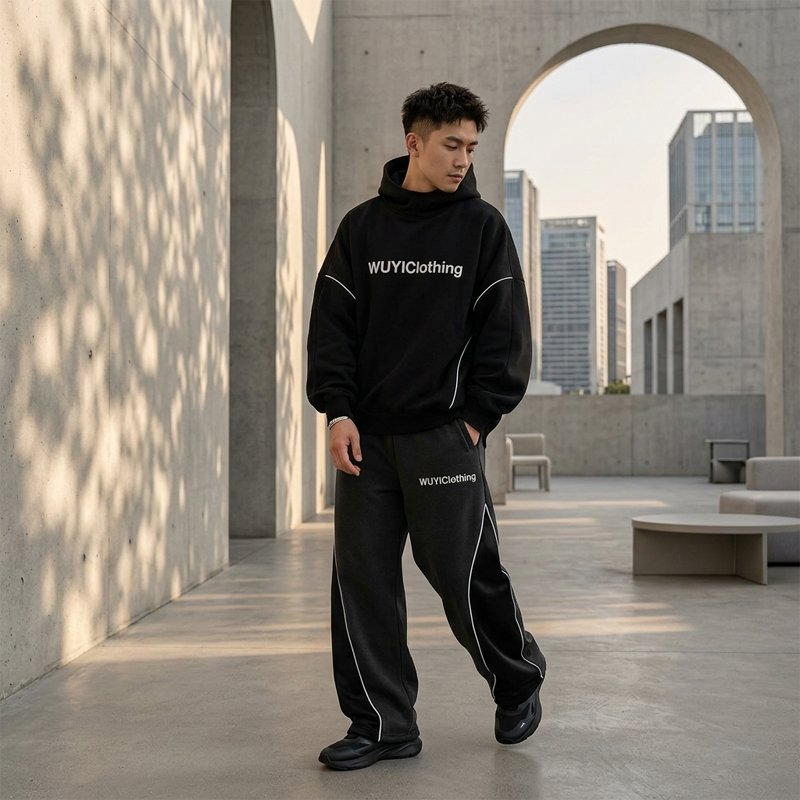
Future Hoodie Design Directions: Smart Fabrics and Functional Integration

Introduction: The Hoodie Is No Longer Just a Hoodie
The humble hoodie has come a long way. From Champion’s 1930s workwear innovation to 1990s skate culture icon to 2020s luxury streetwear staple, it has worn many hats. But the next evolution is not about fashion cycles or cultural appropriation. It is about intelligence.
Here is the short answer: the future hoodie will be a wearable computer, a health monitor, a climate control system, and a communication device—all while looking and feeling like a normal hoodie.
This guide explores the emerging technologies transforming hoodie design: electronic fibers that monitor emotions, haptic feedback systems for immersive experiences, air-based insulation that replaces animal down, and color-changing fabrics that react to UV light. These are not science fiction. They are being developed, patented, and brought to market right now.
Let us get into it.
Part 1: Electronic Textiles — The Hoodie That Knows How You Feel
The most profound shift in hoodie technology is the integration of electronic fibers directly into the fabric itself.
1.1 The Emotion-Sensing Hoodie
Researchers have engineered a smart hoodie integrally knitted from multi-functional electronic fibers designed to recognize and regulate human emotions. This is not a wearable with a bulky sensor clipped on. The technology is embedded during the knitting process, making the hoodie comfortable, flexible, and indistinguishable from standard apparel while simultaneously housing a sophisticated sensory system.
The fibers are responsive to physiological signals that correlate with emotional states, including skin conductivity, heart rate, and subtle muscular movements. This biofeedback data is acquired in real time, enabling continuous monitoring without disrupting the wearer’s daily activities.
Beyond passive monitoring, the hoodie actively participates in emotion regulation by delivering precise haptic feedback via actuator fibers. The tactile stimuli can include gentle vibrations or pressure sensations intended to soothe the wearer or redirect their focus during episodes of emotional distress. This “sense-regulate loop” positions the smart hoodie as both a diagnostic tool and a therapeutic aid.
How it works: Onboard microcontrollers analyze signals locally, reducing the amount of sensitive physiological data sent to external devices. When data transmission is required, secure wireless protocols ensure encryption.
Power source: Flexible, fiber-based supercapacitors and energy-harvesting units convert body heat or kinetic movement into electrical energy, eliminating the need for bulky batteries.
Market reality: The Global Stress Monitoring Hoodie market was valued at $410 million in 2024 and is forecast to reach $2.13 billion by 2033, growing at 20.1% CAGR. Sensor-based systems currently account for 58% of the market share.
1.2 Smart Haptic Feedback Hoodies
The Smart Haptic Hoodie market is exploding. Valued at $245 million in 2024, it is projected to hit $2.1 billion by 2033 at a 26.8% CAGR. These hoodies integrate advanced haptic feedback mechanisms that enable users to experience tactile sensations enhancing gaming, healthcare, sports, and virtual reality.
Key technologies:
- Vibration feedback for notifications and alerts
- Force feedback for immersive gaming and training
- Motion sensors for activity tracking and gesture control
Applications driving growth:
- Gaming and VR: Feel the impact of virtual environments
- Healthcare: Physical rehabilitation feedback and remote patient monitoring
- Sports and fitness: Performance optimization through haptic cues
- Workplace wellness: Stress management and ergonomic feedback
1.3 The Smart Cord Interface
Google’s research team has developed a smart cord woven directly into hoodie drawstrings using traditional textile braiding techniques. Eight sensor threads generate electric fields that detect hand gestures, recognizing six types of operations with 94% accuracy: twisting, flicking, sliding, pinching, grabbing, and patting.
What this enables:
- Twist clockwise to increase volume
- Slide to change songs
- Pinch to start or stop audio
- Flick to scroll through web pages
These gestures are faster than conventional headphone buttons and comparable to touch surfaces, with users preferring smart cords to traditional controls.
Part 2: Air-Based Insulation — Warmth Without Animals or Plastic
One of the most innovative developments in hoodie technology comes from Coversummon, a Korean textile startup that has developed fabric that insulates with nothing but air.
2.1 Airtech Technology: The Pillow Hoodie
Coversummon’s “Pillowdy” (Pillow + Hoodie) combines a neck pillow and a hoodie. In everyday life, it looks like a normal hoodie. When needed, you pump air into an inlet, and the hood inflates into a comfortable neck pillow.
The science: Two impermeable fabrics fused with a functional film trap air in sealed chambers. When air is pumped in, the chambers expand into pre-designed shapes—the same principle as a life tube or inflatable raft.
Performance data: Compared to duck down padding, Airtech is about 18% warmer when filled with 50-60% air. The insulation performance adjusts according to air volume, allowing the same garment to work across varying temperatures.
Why this matters: The fashion industry accounts for 8-10% of global carbon emissions. Duck down and goose down require animal sacrifice. Plastic-based synthetics are petroleum-derived. Airtech offers warmth with none of these ethical or environmental costs.
2.2 Modular Air Chamber Design
The challenge with air insulation is design freedom. Sealing air in the entire garment is expensive and limits how the garment can move. Coversummon solved this with “modular connectors”—dividing the air modules into small pieces connected by channels. A single inlet inflates the entire garment.
Since its launch, the Pillowdy has sold over 67,000 units, establishing it as Coversummon’s representative product.
2.3 Wire-Free Heating Technology
The same company has developed textile materials that generate heat without wires. A conductive film is patterned with heating elements, layered between air-impermeable fabrics, and connected to a battery via conductive snaps.
Key advantages:
- No wires to break or feel
- The heating layer is protected by air-sealed fabric (waterproof, washable)
- No electric shock risk
- Insulation performance adjusts by controlling the battery output
This technology replaces traditional wired heating elements (like electric blankets) with a seamless, washable, garment-integrated solution.
Part 3: UV-Responsive and Color-Changing Fabrics
Adding aesthetic functionality, color-changing fabrics are moving from novelty to durability.
3.1 Internal Mixing vs. Surface Coating
Previous color-changing yarns failed because the UV-responsive material was only coated on the surface. After a few washes, the function completely disappeared.
Coversummon solved this by mixing the UV-responsive material into the yarn during the initial pulling process. The function is built into the fiber itself, not just the surface. This polymerization method ensures the color-changing effect lasts much longer, maintaining functionality even after repeated washing.
3.2 Practical Applications
Rather than making entire garments color-changing (which could be overwhelming), Coversummon focuses on embroidery and accents. Children’s clothing features white embroidery that changes color outdoors. Baseball cap marks become visible when you step into sunlight.
This approach adds “fun” as a functional element—delighting wearers without sacrificing wearability.
Part 4: Health Monitoring Integration
The integration of biometric sensors into hoodies is perhaps the most commercially significant trend, driven by healthcare demand and consumer wellness awareness.
4.1 Continuous Stress Monitoring
Stress monitoring hoodies are being rapidly adopted across healthcare, sports, personal wellness, and workplace settings. These hoodies enable non-invasive, real-time monitoring of physiological stress indicators.
Physiological signals tracked:
- Heart rate variability
- Galvanic skin response
- Temperature
Use cases:
- Healthcare: Monitor patient recovery and detect early signs of stress-related complications
- Sports: Optimize training regimens and prevent burnout
- Workplace wellness: Boost productivity and reduce absenteeism
4.2 Adaptive Clothing for Medical Needs
Not all hoodie innovation is high-tech. The HUG & Spoons Co. hoodie, designed by a University of Calgary student with a chronic condition, addresses a simple but critical need: IV and port access.
The hoodie features strategically placed snaps that allow medical access while keeping patients warm and covered. It looks like a normal hoodie—intentionally—so patients can wear it in clinical and everyday settings without feeling like a patient.
The designer has already received 150 pre-orders, with corporate sponsors purchasing hoodies on behalf of patients who cannot afford them.
Key insight: Functional integration does not always mean high-tech. Sometimes it means thoughtful design that solves real problems for real people.
Part 5: Climate-Responsive and Performance Fabrics
Smart temperature regulation is moving from concept to commercial reality.
5.1 Adaptive Heating and Cooling
Smart hoodies now incorporate sensors that monitor body temperature and environmental conditions, automatically adjusting to keep the wearer comfortable. This technology goes beyond basic moisture-wicking to active thermal management.
Key capabilities:
- Adaptive heating when temperatures drop
- Enhanced breathability and moisture management when warm
- Weather-responsive insulation that adjusts to humidity and wind
5.2 Mainstream Performance Integration
Even mass-market hoodies are incorporating advanced performance fabrics. Nike’s Dri-FIT technology, used in their MLB Authentic Collection hoodies, moves sweat away from the skin for quicker evaporation. The fabric uses 78% recycled polyester and 19.8% BCI cotton—showing how sustainability and performance are converging.
Part 6: The Iterative Design Process — Lessons from LTTStore
Not every hoodie innovation requires breakthrough material science. Sometimes, it is about obsessive refinement of existing features.
LTTStore’s WAN Hoodie V3, developed by Creator Warehouse, demonstrates how small, thoughtful changes accumulate into a significantly better product.
Iterative improvements from V2 to V3:
- Removed underperforming features (shoulder pocket, coin pouch, thumbhole cuffs)
- Redesigned the kangaroo pocket to be less cumbersome
- Switched to a three-panel hood construction for better fit
- Upgraded to heavier-weight cotton terry
- Changed hexagonal drawcord tips and eyelets for aesthetic cohesion
- Surveyed the community to choose the color (red beat orange)
Result: A hoodie that feels “far more premium and purposely functional” without adding any “smart” technology.
Key insight: The best smart hoodie is still a hoodie first. If it is not comfortable, if the hood does not stay up, if the pockets are awkward—no amount of technology will save it.
Part 7: The Market Reality — Growth Projections
The numbers behind these trends are staggering.
7.1 Smart Textile Market Overview
| Market Segment | 2024 Value | 2033 Forecast | CAGR |
|---|---|---|---|
| Smart Textile Market | $3.7 billion | $7.3 billion | 10.0% |
| Smart Haptic Hoodie | $245 million | $2.1 billion | 26.8% |
| Stress Monitoring Hoodie | $410 million | $2.13 billion | 20.1% |
7.2 Key Market Drivers
- Wearable technology adoption: Consumers increasingly expect clothing to do more than cover their bodies
- Mental health awareness: Stress monitoring is a priority for healthcare systems and employers
- Gaming and VR growth: Haptic feedback creates immersive experiences
- Sustainability pressure: Air-based insulation and recycled materials address environmental concerns
- Aging population: Health monitoring wearables support independent living
7.3 Regional Leadership
North America leads the smart textile market, driven by fitness-conscious populations, early technology adopters, and strong healthcare infrastructure. Europe follows with stringent sustainability regulations pushing innovation. Asia-Pacific is the fastest-growing region, with South Korea emerging as a hub for textile material science innovation.
Part 8: Challenges Remaining
Despite the excitement, significant hurdles remain before smart hoodies become mainstream.
8.1 Washability
Electronic components must survive repeated washing. This is a major engineering challenge. Coversummon’s wire-free heating technology is washable because the heating film is sandwiched between air-impermeable, waterproof fabric layers. But not all smart textiles have solved this.
8.2 Power and Battery Integration
Even with energy-harvesting fibers, smart hoodies need power. Bulky batteries ruin the garment’s feel. Flexible, fiber-based supercapacitors and energy-harvesting units are advancing, but miniaturization and integration remain challenges.
8.3 Cost
Current smart hoodies are expensive. The technology is cutting-edge, production volumes are low, and development costs are high. As the market scales and manufacturing processes mature, prices will drop—but affordable smart hoodies are still years away.
8.4 Data Privacy
Emotion-sensing and stress-monitoring hoodies collect sensitive physiological data. Who owns that data? Where is it stored? How is it protected? These questions must be answered before consumers trust smart garments.
8.5 Consumer Adoption
Not everyone wants a hoodie that monitors their stress or vibrates when they play video games. The market is growing, but smart hoodies will likely coexist with traditional hoodies, not replace them, for the foreseeable future.
Part 9: FAQs — Your Quick Questions Answered
Q1: Are smart hoodies actually available to buy today?
Some are. Coversummon’s Pillowdy (inflatable neck pillow hoodie) has sold over 67,000 units. Stress monitoring hoodies are available through medical and corporate wellness channels, though primarily B2B. Consumer-ready smart haptic hoodies are still emerging. Mass-market availability is 2-5 years out.
Q2: Can I wash a smart hoodie?
It depends on the technology. Coversummon’s heating hoodies are washable because the electronics are sealed between waterproof fabric layers. Google’s smart cord prototypes are also washable due to embedded construction. However, you should always check the specific product’s care instructions.
Q3: How much do smart hoodies cost?
Current prices vary widely. Basic air-insulated hoodies start around $150-200. Stress monitoring hoodies in medical channels range from $300-800. Consumer smart haptic hoodies will likely launch in the $200-400 range, dropping as production scales.
Q4: Do smart hoodies need batteries?
Most do, but some use energy-harvesting fibers that convert body heat or movement into electricity. For active features (heating, haptic feedback, data transmission), batteries are currently required.
Q5: What is the difference between “smart fabric” and “wearable tech”?
Wearable tech typically refers to devices worn on the body (smartwatches, fitness trackers). Smart fabrics integrate the technology into the textile itself—no separate device. The smart hoodie is an example of smart fabric, not a wearable accessory.
Q6: Will smart hoodies replace traditional hoodies?
No. They will coexist. Traditional hoodies will remain the default for most consumers. Smart hoodies will serve specific use cases (health monitoring, gaming, extreme conditions) and early adopters.
Q7: Can smart hoodies help with mental health?
Yes. Research on emotion-sensing hoodies shows they can recognize stress, anxiety, and other emotional states through physiological signals, then deliver haptic feedback to regulate them. This is a significant development for mental health monitoring and intervention.
Q8: Are smart hoodies safe?
The technologies are designed with safety in mind. Coversummon’s wire-free heating eliminates electric shock risk. The smart cord uses low-power electric fields for sensing, not high-voltage currents. As with any electronic device, quality varies by manufacturer.
Q9: Which brands are leading in smart hoodie development?
- Coversummon (Korea): Air insulation, wire-free heating, UV color change
- Google Research: Smart cord interfaces and e-textiles
- Academic researchers: Emotion-sensing integrally knitted fibers
- Nike: Performance fabrics with sustainability integration
- Startups and medical device companies: Stress monitoring and health sensing
Q10: What is the most practical smart hoodie available now?
For most people, the most practical “smart” hoodie currently available is not the most technologically advanced. It is the thoughtfully designed one: the IV-accessible hoodie for medical patients, the inflatable travel hoodie, or the well-constructed traditional hoodie with performance fabrics. Cutting-edge sensing and haptic hoodies are still in early adoption phases.
Conclusion: The Hoodie Is Becoming a Platform
The hoodie has always been a canvas. First for graphics, then for brand identity, then for cultural expression. The next canvas is technology.
Electronic fibers, haptic feedback systems, air-based insulation, UV-reactive materials, and biometric sensors are transforming the hoodie from passive garment to active platform. It will monitor your health, regulate your emotions, keep you warm without animal products, and connect you to digital worlds—all while looking and feeling like a normal hoodie.
Three things to remember:
- The technology is already here. Emotion-sensing hoodies exist in research labs. Air-insulated hoodies are on the market. Smart cords have been prototyped. This is not future speculation—it is current reality, just not yet scaled.
- Functionality must not sacrifice comfort. The best smart hoodie is still a hoodie first. If it is not comfortable, if the hood does not stay up, if it is awkward to wear—no amount of technology will save it.
- Market growth is explosive. Smart textile market at 10% CAGR, smart haptic hoodies at 27% CAGR, stress monitoring at 20% CAGR. This is not a niche. It is the next major apparel segment.
The hoodie has been reinvented many times: workwear, sportswear, streetwear, luxury good. Its next reinvention is as a smart garment. And that future is closer than you think.
More Articles from WUYI Apparel
Want to learn more about styling essentials hoodies or other apparel tips? Check out some of our other helpful articles:
- Wearing Black to a Wedding: A Modern Etiquette Guide
- Rainwear Jackets: The Perfect Fusion of Fashion and Function
- How To Measure Clothes
- Casual clothing – Casual and elegant through everyday life
- How to Find Your Style:An in-depth exploration of one’s own clothing style
For more tips and tricks on fashion and lifestyle, don’t forget to visit our Blog Section.
Head over to our Shop Page to browse our full collection and pick your favorite essentials hoodie