Welcome to customize all kinds of clothing

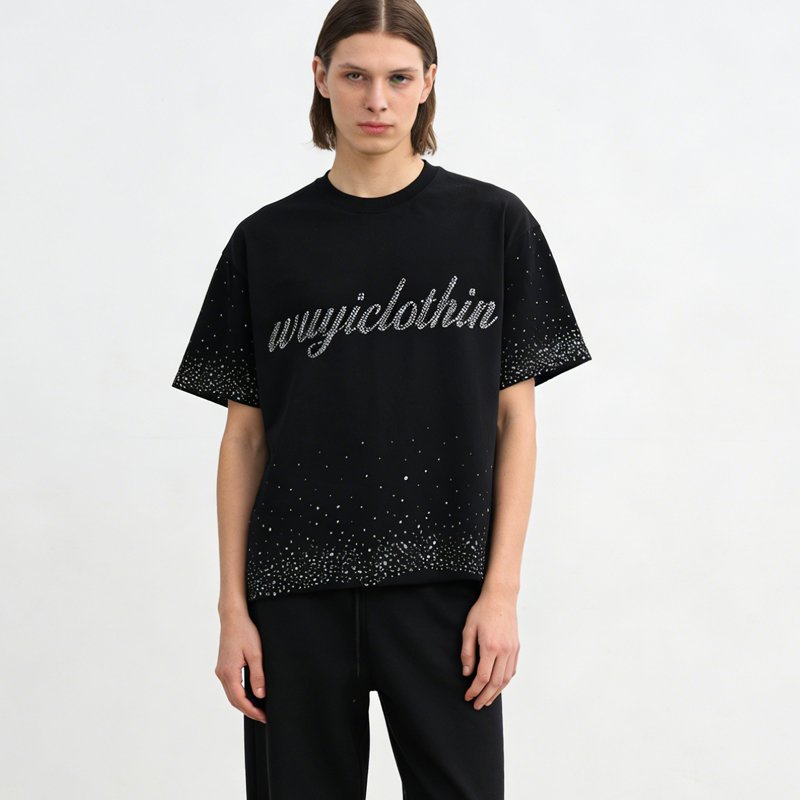
Custom T-Shirt Design 2026: The Complete Guide to Creating, Sourcing, and Selling

There’s a quiet revolution happening in the world of custom t-shirts—and 2026 is the year it reaches full momentum. What was once a simple promotional item has transformed into something far more significant: a primary canvas for identity, brand messaging, and artistic innovation .
From the rise of AI-powered design tools to the explosion of print-on-demand supply chains, the custom t-shirt landscape has never been more accessible—or more competitive. Whether you’re launching a clothing brand, designing merchandise for an organization, or sourcing for a business, understanding the 2026 landscape is the difference between creating shirts that sit in boxes and shirts that people genuinely want to wear.
This is your complete guide to custom t-shirt design in 2026.
Why 2026 Is the Defining Year for Custom T-Shirts
The numbers tell a compelling story. The global custom t-shirt printing market is projected to reach $17.38 billion by 2034, growing at an impressive 11.97% CAGR from 2026 onward . This isn’t just growth—it’s acceleration, driven by three powerful forces.
The Self-Expression Economy
Consumers in 2026 aren’t just buying clothes. They’re buying identity. Social platforms, viral challenges, and digital design libraries mean anyone can now order a garment with their favorite quote, artwork, or meme—often for less than the cost of a meal . The t-shirt has become the ultimate medium for personal storytelling, and people are taking full advantage.
Technology That Democratizes Design
Advanced print technologies have fundamentally changed what’s possible. Direct-to-garment (DTG) printing delivers vibrant, photo-realistic results on cotton. Direct-to-film (DTF) transfers offer flexibility for small runs. Dye-sublimation enables all-over prints that were once impossible . Combined with AI-powered design tools, these technologies mean you don’t need a design degree to create something extraordinary.
Sustainability as Standard
The 2026 consumer is more environmentally conscious than ever. This has pushed manufacturers to respond with organic cotton options, water-based inks, and recycled materials . The market has matured to the point where eco-friendly options are no longer niche—they’re expected. Certifications like Oeko-Tex, GRS, and Fair Trade now influence purchasing decisions across every demographic .
The 2026 Design Trends That Actually Sell
Design is the heart of any custom t-shirt project. But what’s actually connecting with buyers in 2026? Analysis of over 10,000 custom apparel orders reveals some clear patterns .
Slogan and Quote Tees
Typography continues to dominate. Motivational phrases, witty one-liners, and brand-driven messaging appear consistently across bestseller lists . The key difference in 2026 is placement and execution—unique typography arrangements, color blocking, and unexpected positioning set successful designs apart from generic text prints.
Y2K and 90s Graphics
The nostalgia wave hasn’t crested yet. Vibrant gradient effects, oversized prints, playful color combinations, and retro-inspired graphics continue to resonate strongly with Gen Z and millennial buyers . However, Fresh Prints data shows this aesthetic is beginning to soften, suggesting it may be reaching peak saturation .
The Rise of Grunge and Hand-Drawn Styles
While classic designs remain the top overall category, more expressive styles are gaining ground. Grunge aesthetics and hand-drawn illustrations are showing clear upward movement in 2026 . This reflects a broader desire for authenticity and individuality—designs that feel crafted rather than manufactured.
Nature and Earth Themes
Botanical illustrations, wildlife graphics, and environmental slogans are trending strongly . These designs appeal to the eco-conscious consumer while offering a timeless quality that transcends seasonal trends. Earth tones, organic textures, and subdued color palettes define this category.
All-Over Prints
Full-shirt graphics represent the premium end of the custom market. Enabled by advanced sublimation and DTF methods, all-over prints allow for designs that wrap around the entire garment . For designers seeking true artistic expression—and for customers wanting something genuinely unique—this is the fastest-growing segment.
Minimalist Typography
At the opposite end of the spectrum, minimalism remains powerful. Short, meaningful texts in clean fonts, often paired with subtle geometric shapes or monochrome palettes, appeal to buyers seeking sophistication over statement .
The Technology Powering 2026 Custom T-Shirts
Understanding how custom shirts are made in 2026 is essential for anyone sourcing or selling. The method you choose affects cost, quality, turnaround time, and what designs are possible.
Screen Printing: Still the King of Bulk
If you’re ordering in volume, screen printing remains the default choice. Approximately 70% of custom apparel orders use this method . The reasons are straightforward: it scales beautifully for large orders, costs per unit drop significantly with quantity, and the results are consistently crisp and durable .
Screen printing works by pushing ink through a mesh stencil onto the garment. Each color requires a separate screen, which makes it less economical for small runs or designs with many colors. But for bulk orders of 50+ units with simple color palettes, it’s the most cost-effective option available.
Direct-to-Garment (DTG): The Digital Revolution
DTG printing functions much like an inkjet printer—but for t-shirts. It sprays ink directly onto the fabric, allowing for photographic detail and unlimited colors . This technology has made short-run custom printing economically viable for the first time.
DTG excels with:
- Small orders (1–50 units)
- Designs with many colors or gradients
- Photographic images
- On-demand fulfillment models
The trade-off is slower per-unit production speed and higher individual unit costs compared to screen printing at scale.
Direct-to-Film (DTF): Flexibility Meets Quality
DTF transfers have emerged as a versatile middle ground. The design is printed onto a special film, then heat-pressed onto the garment . This method works on virtually any fabric type (including polyester, where DTG struggles) and offers excellent color vibrancy.
For small businesses and designers testing new concepts, DTF is often the ideal choice. It requires minimal equipment investment and delivers professional results without minimum order quantities.
Dye-Sublimation: The All-Over Solution
Sublimation is the go-to method for all-over prints. The design is printed onto transfer paper, then heat-pressed onto the garment, bonding with the fabric at a molecular level . The result is permanent, soft to the touch, and covers the entire garment—seams and all.
The limitation is that sublimation only works on polyester or polyester blends. But for athletic wear, festival merchandise, and statement pieces, it’s unmatched.
Embroidery: Elevating the Everyday
Embroidery accounts for nearly 20% of custom apparel orders and is particularly popular for fleece sweatshirts, structured shirts, and hats . There’s a perception shift happening: embroidered pieces feel more permanent, more elevated, and less likely to deteriorate over time.
For organizations and brands seeking longevity, investing in embroidery for select items communicates quality that screen printing alone can’t match .
The Software That Powers 2026 Designs
Creating great custom t-shirts requires the right tools. Here’s what designers are using in 2026.
Professional Tier: Adobe Creative Cloud
Adobe Photoshop and Adobe Illustrator remain the industry gold standards . Photoshop excels at photo manipulation, texturing, and effects—ideal for complex, layered designs. Illustrator is the go-to for vector graphics, logos, and typography that need to scale without losing quality.
The investment is substantial: Photoshop starts at $20.99/month, Illustrator at $22.99/month . For professionals, it’s worth every penny.
Professional Alternative: Affinity Designer
For those seeking professional capabilities without subscription costs, Affinity Designer offers a compelling alternative. A one-time purchase of $69.99 delivers tools comparable to Illustrator . It’s increasingly popular among independent designers and small studios.
Beginner-Friendly Options
Canva has become the go-to for beginners and non-designers. Its freemium model, vast template library, and intuitive interface make it possible to create professional-looking designs with minimal experience .
PlaceIt offers a browser-based experience focused specifically on t-shirt design and mockup creation. Subscriptions start at $9.99/month, making it accessible for casual creators .
Free and Open-Source
GIMP continues to serve as a powerful, completely free alternative to Photoshop . While the learning curve is steep, the capabilities are extensive. Inkscape offers similar vector capabilities for those who prefer open-source solutions.
Mobile and On-the-Go
The T-Shirt Designer Tool app (rated 4.6 stars) allows users to create designs directly from mobile devices . Features include hundreds of templates, SVG export, mockup viewing, and the ability to save and share designs. For creators who work on the go, mobile tools have become genuinely viable.
The Garment Matters: Choosing the Right Blank
A great design on a poor-quality shirt is a missed opportunity. In 2026, the garment itself has become a crucial part of the design equation.
The Shift Toward Built-In Details
One of the most significant trends in 2026 is the preference for garments with built-in character rather than added embellishments . Instead of piling on rhinestones or extra appliqués, buyers are seeking:
- Striped or patterned fabrics
- Hood stitch detailing
- Contrast hood linings
- Textured materials
- Structured silhouettes
This shift matters because it changes the design approach. Instead of asking “how much can we add to this blank?”, successful designers now ask “is this base strong enough to stand on its own?” .
Fabric Choices
- 100% cotton: Soft, breathable, ideal for DTG and screen printing. Premium options include organic and sustainably sourced cotton .
- Cotton blends: Added stretch and durability. Popular for athletic and lifestyle wear.
- Performance fabrics: Moisture-wicking, UV-protection, and anti-odor properties for active applications .
- Recycled materials: Increasingly available and increasingly demanded by eco-conscious buyers .
The Quality Tiers
The launch of NextDayTees.com introduced a useful framework for understanding quality tiers:
- Good (Standard Basic) : Budget-friendly, reliable quality
- Better (Comfort Heavyweight) : Thicker, soft, durable
- Best (Premium Soft) : Top-tier, extremely soft, lightweight
This tiered approach acknowledges what buyers already know: different projects have different needs, and one quality level doesn’t fit all.
What’s Actually Selling: Amazon Data for 2026
Understanding retail demand is essential for anyone sourcing or designing custom t-shirts. Amazon sales data provides a real-time window into what consumers actually buy .
The top sellers in recent months include:
- Women’s fitted ribbed t-shirts (long sleeve, stretch fabric): Over 14,000 monthly units, 4.6-star rating
- Men’s Hawaiian/print button-down shirts: Strong summer performance, 4.6-star rating
- Men’s athletic fit knit pullovers: 4.3-star rating, consistent demand
- Women’s floral print button-down tops: Loose fit, seasonal popularity
Key insights for suppliers and designers:
- High ratings (4.3+ stars) are essential for sustained sales
- Fitted women’s basics show consistent, high-volume demand
- Print shirts maintain stable sales with seasonal peaks
- Price points between $19–$30 dominate retail
For wholesale buyers, this data provides actionable intelligence: align your portfolios with proven formats, ensure quality construction, and price competitively within established ranges .
Sourcing Custom T-Shirts in 2026
For businesses and organizations, sourcing custom t-shirts requires navigating a complex landscape of options. Here’s what to consider.
The Three Pillars: Quality, Speed, Price
The old adage says you can only have two. In 2026, the best suppliers deliver all three . NextDayTees.com exemplifies this shift with guaranteed next-business-day production, transparent pricing tiers, and a simplified ordering process that eliminates confusion .
What to Look for in a Supplier
Turnaround time: In an era of next-day expectations, suppliers who can’t deliver quickly lose business. Look for guaranteed production timelines and clear shipping estimates .
Design tools: The best platforms offer intuitive online design tools with real-time previews. No complicated quoting processes. No confusing options .
Transparent pricing: The “Good, Better, Best” model has proven successful because it helps buyers make decisions without confusion .
Sample availability: Quality varies dramatically between suppliers. Order samples before committing to large orders. The best suppliers make this easy.
Regional Considerations
- North America: Minimalist designs, slogan-based graphics, retro colorways. Eco-consciousness is a major driver .
- Europe: Ahead in eco-minimalism and sustainable cotton. Subtle, refined aesthetics .
- India: Colorful all-over prints, event-specific bulk orders. Value-conscious buyers seeking quality .
The College and Campus Market: A Case Study
Greek life and student organizations represent a massive segment of the custom t-shirt market. Analysis of over 10,000 orders across 500+ schools reveals specific patterns .
Print Methods
- Screen printing: 70% of orders, dominant for its scalability and cost-effectiveness
- Embroidery: 20% of orders, chosen for elevated staples like fleece and structured shirts
What Students Want in 2026
The data shows a clear preference for:
- Garments with built-in character (stripes, contrast linings, textured fabrics)
- Designs that align with personal style rather than just representing the group
- Active-inspired pieces that work for class, workouts, and spontaneous plans
The top product categories reflect this shift: sportswear, athleisure, and outdoorsy styles now dominate . Students want merch that says “I have a life” as much as “I belong to this group.”
Design Styles Trending Up
- Grunge aesthetics
- Hand-drawn illustrations
- Classic designs (still the top category)
Design Styles Declining
The key insight for organizations: the best merch does two jobs. It represents the collective while leaving room for individual expression .
The Custom T-Shirt Workflow: From Concept to Finished Product
Whether you’re designing one shirt or a thousand, the workflow follows the same essential steps.
Step 1: Concept Development
Define your purpose. Is this for a brand launch? A team event? A merchandise drop? The answer determines everything else.
Step 2: Design Creation
Choose your software based on your skill level and design complexity. For beginners, Canva or PlaceIt. For professionals, Photoshop or Illustrator. For vector logos, Illustrator or Affinity Designer .
Step 3: Garment Selection
Consider fabric, fit, color, and quality tier. Remember: the best designs on poor garments won’t sell.
Step 4: Print Method Selection
- Screen printing for bulk orders with simple colors
- DTG for small runs with photographic detail
- DTF for versatility across fabric types
- Sublimation for all-over prints
- Embroidery for elevated staples
Step 5: Supplier Sourcing
Research suppliers who can deliver your combination of quality, speed, and price. Order samples before committing to large volumes.
Step 6: Production and Fulfillment
For on-demand models, work with suppliers who integrate with your sales platform. For bulk orders, confirm timelines and quality control processes.
Step 7: Marketing and Sales
In 2026, social proof is essential. High-quality mockups, customer reviews, and authentic imagery drive conversions .
Sustainability: The New Expectation
The custom t-shirt industry has historically struggled with environmental concerns. In 2026, that’s changing—and the change is accelerating.
What Consumers Expect
- Organic and recycled materials
- Water-based inks
- Transparent supply chains
- Certifications (Oeko-Tex, GRS, Fair Trade)
- Ethical production practices
What Manufacturers Are Delivering
Leading suppliers now offer organic cotton as a standard option, not a premium niche. Water-based inks that eliminate harsh chemicals. Supply chain transparency that allows buyers to trace materials to their source .
For businesses, sustainability is no longer optional. It’s a competitive necessity.
The Eco-Minimalism Trend
Subdued color stories, neutral palettes, and responsibly sourced fabrics are increasingly central to design . This isn’t just about materials—it’s about an entire aesthetic that signals environmental consciousness.
Looking Ahead: The Custom T-Shirt Market Through 2034
The market trajectory is clear. From $6.28 billion in 2025 to a projected $17.38 billion in 2034, the custom t-shirt printing market shows no signs of slowing .
Key drivers through the decade include:
- Continued advancement in digital printing technology
- Deepening integration of AI design tools
- Expanding print-on-demand infrastructure
- Growing consumer demand for personalization
- Increasing emphasis on sustainable production
For businesses, this growth represents opportunity. For designers, it represents an expanding canvas. For consumers, it represents the continued democratization of fashion.
Final Thoughts: Creating T-Shirts That Matter
In 2026, custom t-shirts have transcended their promotional origins. They are:
- Canvases for identity—worn with intention, not obligation
- Tools for belonging—connecting groups through shared aesthetic
- Vehicles for expression—carrying messages that matter
- Business opportunities—scalable, accessible, increasingly sophisticated
The best custom t-shirts in 2026 share common traits: thoughtful design, quality materials, appropriate print methods, and authentic connection to the wearer. They don’t scream for attention. They earn it through craftsmanship and meaning.
Whether you’re designing for a brand, an organization, or yourself, the principles are the same: start with purpose, choose quality materials, select the right method, and never underestimate the power of a garment that someone actually wants to wear.
The custom t-shirt market of 2026 is waiting. What will you create?they’ll love.
Explore More Articles from WUYI Apparel
Want to learn more about styling essentials hoodies or other apparel tips? Check out some of our other helpful articles:
- Wearing Black to a Wedding: A Modern Etiquette Guide
- Rainwear Jackets: The Perfect Fusion of Fashion and Function
- How To Measure Clothes
- Casual clothing – Casual and elegant through everyday life
- How to Find Your Style:An in-depth exploration of one’s own clothing style
For more tips and tricks on fashion and lifestyle, don’t forget to visit our Blog Section.
Head over to our Shop Page to browse our full collection and pick your favorite essentials hoodie today!