Welcome to customize all kinds of clothing

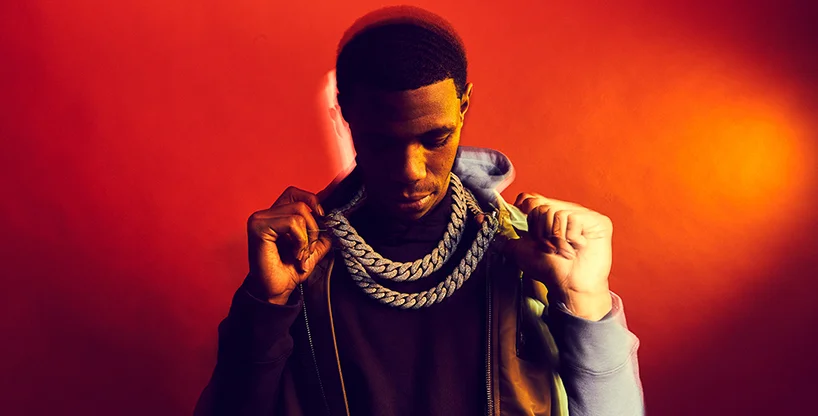
A Boogie wit da Hoodie: The Melodic Melancholy of a Bronx Storyteller
In the sprawling, competitive landscape of modern hip-hop, where personas are often larger than life and authenticity is a prized currency, the name “A Boogie wit da Hoodie” stands out as both a declaration of origin and a artistic mission statement. Born Artist Julius Dubose, the New York rapper, singer, and songwriter has carved a unique and indelible space for himself by masterfully blending street-hardened lyricism with vulnerable, melodic crooning. His chosen moniker is not merely a catchy alias; it is the foundational myth of his entire career, a key to understanding the duality that defines his music and the real-world narratives that have shaped his journey.
The name itself originated from his childhood. A young Julius Dubose was a fan of the Japanese manga and anime Naruto, whose protagonist uses a deceptive fighting style called “The Art of the Hoodie.” Combined with his quiet, observant nature, his friends began calling him “Artist” when he had his hood up, as he would become a different, more focused person. This evolved into “A Boogie,” a playful twist on “Artist” and the sneaky, ninja-like persona. The “wit da Hoodie” suffix permanently anchors him to his identity, a constant reminder of the streets and the specific environment of Highbridge, The Bronx, that raised him. This duality is the engine of his art: the “A Boogie” is the melodic hitmaker who explores heartbreak and emotional turmoil, while the “Artist wit da Hoodie” is the product of his environment, narrating tales of survival, loyalty, and the perils of street life.
This core conflict between the tenderness of love and the toughness of the streets has become A Boogie’s signature sound. His breakthrough project, the 2016 mixtape Artist, is a perfect blueprint. Tracks like “My Shit” and “Jungle” are anthemic in their melancholy, where Auto-Tune is not used as a crutch but as an emotional filter, amplifying the pain and yearning in his voice. He doesn’t just rap or sing; he emotes, creating a sonic world where listeners can feel the weight of his experiences. This accessibility, coupled with his undeniable New York swagger, propelled him to stardom. His major-label debut, The Bigger Artist, and subsequent albums like Hoodie SZN (which famously dethroned Drake’s Scorpion from the top of the Billboard 200) solidified his status. Hoodie SZN, in particular, is a concept album built around his alter-ego, a deeper exploration of the man beneath the hoodie, grappling with fame, fortune, and the friends he left behind.
However, the world that created the “Artist wit da Hoodie” is not confined to studio narratives. The very real struggles and dangers of that life have consistently intersected with his career, providing stark, real-life case studies of the themes he explores in his music.
Real-Life Case Studies:
1. The 2015 Robbery and Shooting: The Origin Story Incident
Before the fame and platinum plaques, A Boogie was still Julius Dubose, an aspiring artist from the Bronx. In a pivotal and harrowing incident in 2015, he was lured to a location under the pretense of a musical collaboration. Upon arrival, he was ambushed, robbed at gunpoint, and shot at. He managed to escape physically unharmed, but the psychological impact was profound. This event is a foundational case study for the “wit da Hoodie” persona. It directly informed the paranoid, survivalist mindset that permeates his earlier music. Tracks like “No Comparison” subtly reference the betrayal and the constant need for vigilance. This incident is the real-life bedrock of his lyrics about trust issues and the harsh realities of his environment, proving that the content of his music was not fabricated for street credibility but was a documented part of his life.
2. The Highbridge Murder and Its Aftermath: The Weight of Loyalty
The collective A Boogie was a part of, Highbridge the Label, founded with his late friend Quincy “QP” Acheampong, was his family. In September 2016, QP was tragically murdered in the Bronx. This devastating loss sent shockwaves through A Boogie’s world and became a central, painful theme in his artistry. His music post-2016 is often dedicated to or heavily references QP. The song “Baguades” from The Bigger Artist is a direct and emotional tribute. This tragedy is a painful case study of the “cost of the hoodie”—the very real grief and loss that comes with loyalty to one’s origins. It transformed his music, adding a layer of profound sorrow and a sense of survivor’s guilt that he has had to navigate in the public eye, all while honoring his friend’s memory.
3. The 2020 Concert Brawl in Manhattan: When the Street Invades the Stage
As A Boogie’s fame grew, so did the challenge of separating his past life from his present success. In February 2020, during a performance at the upscale Manhattan venue, the Apollo Theater, a violent brawl erupted in the crowd. The fight was reportedly sparked by a member of A Boogie’s crew confronting an individual who was allegedly flashing gang signs. The situation escalated rapidly, leading to chaos, injuries, and a tarnished event. This incident serves as a stark case study of how the conflicts of the “hoodie” world can infiltrate and disrupt the polished world of a global touring artist. It highlighted the difficult tightrope he must walk: remaining true to the code of the streets that birthed him while managing the responsibilities and safety concerns of a major commercial enterprise.
4. Legal Battles and Industry Hustle: The Business Behind the Artist
Beyond physical danger, the “hoodie” also represents the hustle and the legal complexities of rising from the bottom. A Boogie has been involved in his share of legal disputes, most notably a lawsuit filed against his former manager, who allegedly used a forged signature to secure a predatory loan. This case is a critical study of the business side of being “A Boogie wit da Hoodie.” It underscores that the challenges aren’t only about physical survival but also about navigating an industry that can often exploit young artists from underserved communities. His fight to control his masters and his publishing is a modern-day version of the street hustle, transferred to boardrooms and courtrooms.
In conclusion, A Boogie wit da Hoodie is more than a stage name; it is a complex, living narrative. It is the story of Artist Julius Dubose, a man forever connected to the environment that shaped him, constantly negotiating the space between his internal emotional world and the external pressures of his origin. The melodic hooks make you feel his heartbreak, while the gritty verses ground you in his reality. The real-life cases of robbery, loss, public violence, and legal strife are not separate from his art; they are the very source material. They prove that the “hoodie” is not a costume but a second skin, a constant reminder of where he came from and the heavy, yet inspiring, story he continues to tell.